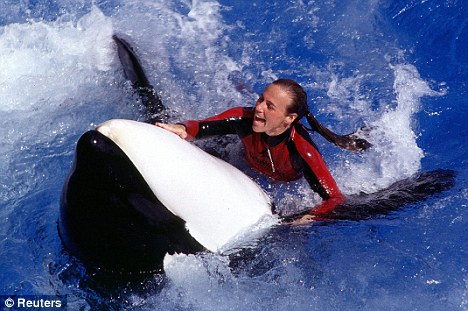
On February 24, 2010 in SeaWorld’s Shamu Stadium in Orlando, Florida, animal trainer Dawn Brancheau was pulled under the water by an orca. A few minutes later, Dawn was dead. Subsequent discussion in the media and around the Net has focused on the keeping of orcas and the dangers of working with powerful predators.
Profoundly missing in this discussion is Dawn’s voice.
I cannot speak for Dawn, but I can share with you the professional animal trainers’ perspective. You see, we all understand a common truth, and when an event like this occurs, we talk late into the night trying to figure out how we can effectively share that truth with others – how we can explain why, as Roy Horn was slipping from consciousness in the jaws of Mantecore the tiger during a Las Vegas show, he was saying over and over, “Please don’t hurt the cat… .”
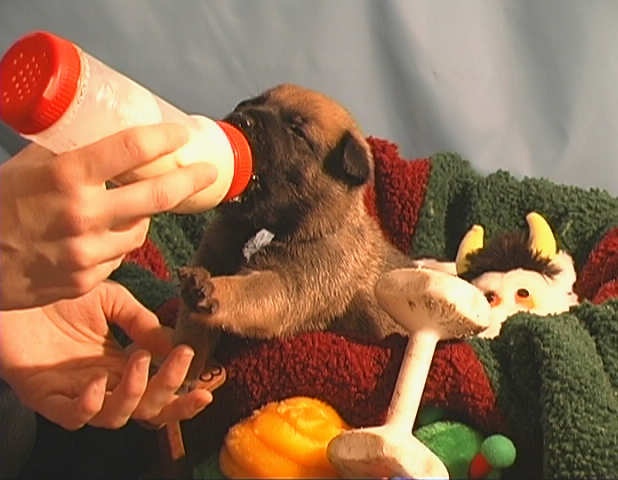
Animal training is not a job, not a hobby, not an interest. It is an all-consuming passion. Those of us who devote our lives to working with animals love what we do beyond reason. We work 365 days a year, and when we are not working with animals, we are playing with them. We forego vacations, families, nice clothes, tidy homes, and most social activities to spend our lives with animals. We spend countless hours talking about how to care for animals, we get up every few hours to bottle-feed baby creatures, we spend all our money on animal care, and we use most of the rooms in our homes for something animal related. We are joyously consumed by our chosen path, and when an animal causes one of us injury or death we are sad, but hold no ill-will towards the animal. Let me explain.
We work with animals – not Disney characters, or humans wearing fur costumes – but real animals with real teeth and claws and immense power who behave according to their animal natures. We know that our chosen vocation is extremely safe based on the number of people harmed, but we also recognize that it entails real risk. We believe that life is an adventure we cannot authentically live solely by avoiding those things that might result in failure, injury, or death. Some people climb mountains, race cars, surf, pilot airplanes, luge, or share their lives with animals, and each of these journeys poses risks, although in truth people are far likelier to die in traffic accidents or childbirth than in any of these more dramatic undertakings. Sitting at home on a couch may indeed be a safer choice, but living a rich and full life and owning our own choices and their consequences are worth a little risk.
When accidents occur, people often want to examine the details and motivations of an animal’s behavior to understand exactly what happened and why. Careful investigation and analysis is a valuable process to allow us to improve our techniques and avoid needless future accidents, but in truth we can rarely know precisely why an animal behaved in a certain way. In a very real sense, however, such speculative detail does not matter: whether the animals were attacking, trying to protect themselves, sexually aroused, responding in annoyance to excessive pressure or fear, or some other miscue, the stark truth is that any of these circumstances could have arisen with similar outcomes. Many animals are vastly more powerful than humans: given sufficient time, wherever humans and animals interact, injuries may occur.
People who argue against working with animals often assert that certain animals are “unpredictable,” a completely erroneous claim. Each species, and each individual animal, is endowed with a well-established range of behaviors and rarely acts in conflict to these. Understanding and correctly predicting animal behavior is among the most basic challenges and responsibilities of any trainer.
Animals are often held accountable for their actions, a profoundly wrong conclusion: animals are not subject to “blame”: they always and simply act as animals, and people are responsible for minimizing situations in which harm might come to anyone.
Underlying the common reaction to traumatic animal incidents lurks a contemporary human expectation that the world should be “risk-free.” As human enterprise has relentlessly expanded, we have paved, denuded, and sanitized huge portions of the planet. In virtually every populated environment, we have effectively eliminated any predator that might pursue us. We fully expect handrails and padding and signs to protect us at all times. But nature cannot and should not be completely tamed. When we venture into the wilderness, or bring a piece of the wilderness into our world, we find that bears, wasps, mountains, skunks, waves, tigers, and orcas do not respect our notion of sovereignty and will behave as they have behaved since time immemorial. Innate animal behavior is not amenable to human moralizing: it is neither good nor bad. It is simply a truth that we must understand if we wish to interact with the natural world. Each day, millions of animals safely coexist with man. Many visit schools, perform tricks, and lounge around. For hundreds of shows, Roy’s tigers reliably came on stage and performed perfectly. Such numberless days of productive and enriching interaction cannot be forgotten as we scrutinize the day someone is injured.
Why is it that when people die in automobile accidents we do not seek to ban cars? Or when people die on mountains we do not seek to outlaw mountain climbing; but whenever someone is injured by an animal there is such an outcry? There are four reasons:
1. Animal attacks are rare, which makes them dramatic and newsworthy.
2. Few people actually work with animals or experience them firsthand: and it is much easier to blame, condemn, and legislate out of existence something you do not understand and that does not directly affect you.
3. Over millions of years of evolution, hominids developed a powerful innate fear of being eaten.
4. Human society is plagued by uninformed zealots always ready to twist any event to serve their purpose:
The loudest voices heard in the wake of traumatic animal incidents are those of Animal Rights advocates who aspire to outlaw all animal ownership and who seize any tragedy as an opportunity to chant their mindless rhetoric: “these animals ‘belong’ in the wild. This death proves it…” No. By now every thoughtful reader should realize this is simply hogwash. Nearly every species of animal can be superbly maintained in captivity where they are enabled to live rich lives that are longer and more comfortable than in the wild. We can learn from such creatures and enjoy them and share them with millions of people – especially young people – who will grow to care about the natural world. These animals are not demeaned or mistreated and are not yearning for freedom. They have plenty of space, excellent nutrition and fabulous lives. The only people who believe these animals have bad lives are people who have little experience with them and are forming their opinions based on uninformed sentimentality–people with genuine expertise quickly learn that these animals have excellent lives. The accidental death of a person who devoted herself to the well-being of captive orcas does not prove that orcas cannot be kept humanely, and the propagandists at PETA should be profoundly ashamed for using trainer Dawn Brancheau’s death to preach their own agenda, an agenda rejected and reviled by every thoughtful animal trainer.
As a professional working every day with powerful predators, I do not fear for my life; rather, I fear that should I be injured or killed by an animal, people who espouse “rights” but care nothing for actual animals will use such an event to harm the very animals I have spent my life cherishing.
We love these animals completely, even when their nature does not accommodate human society, and even when their actions harm us. They share their worlds with us, and in doing so bring immeasurable joy to our lives. We are afraid, not of them, but for them. We want them to be preserved in the wild and in captivity by skilled and dedicated experts, and we want people to stop being enraged when they behave like animals.
All the lives of all the animal trainers ever lost working with animals is a number far smaller than the number of children who starved to death while you were reading this article. Working with animals is safe and immeasurably beneficial for the humans and animals. If you really want to help someone, focus on providing food and healthcare to the millions of people who absolutely will perish without your help, and leave those of us who love animals to make our own well-informed decisions about how to balance our safety with our passions.
I am heading outside now to play with my beloved animal friends. I may make a mistake, and I may die. If so, please do not mourn the manner of my death. Do not blame the animal. Do not imagine that I was an idiot, or naively unaware of what could happen, or thought myself invincible or protected by the animals’ love. It is the life and death I chose, and lived without regret. A lifetime full of joy, passion, and wonder shared with many magnificent animals whose lives were also full of joy. Whenever and however I die, I have been blessed to live my dream.

Today was one of those days when you try to stay inside. We mulled cider, finished decorating for Christmas, and played fetch in the living room. When we had to go outside to do chores we bundled up with mittens and hats. This is the first truly cold week of the season at our facility, and it has me thinking, again, about how technology benefits animals.
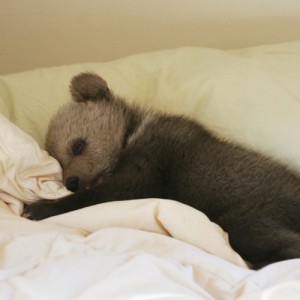
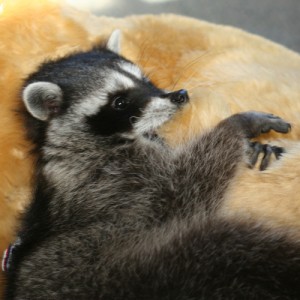
The most obvious benefit is simple heat—whether a propane heater, a wood stove, a baseboard heater, radiant flooring, or even just a roaring fire, how grateful we all are to be inside and warm. We take the dogs out for exercise several times a day, and they absolutely enjoy it, but after an hour they are back at the front door imploring us to let them get back to their comforters and heaters!
Closely related to warmth is dryness. Each of our animals has somewhere dry at all times, usually up to their knees in soft dry bedding—woodchips to straw, hog fuel to mattresses, pillows to down comforters. Even the luckiest wild animals are lying on frozen ground that melts and soaks their fur, leaving them with little protection against the cold ground that sucks the energy out of them.
Water is perhaps the hardest thing to ensure during the winter. Trough heaters and constantly running hoses, and we still end up carrying buckets of hot water several times each winter to keep warm water available. In the wild, outside of the fast moving rivers, there is just no water. The deer are licking a few drops of moisture off rocks, hoping to get enough to stay alive till the next thaw. This is particularly hard for ruminants whose stomachs do not do well with cold water.
Keeping them from slipping is also a challenge. On icy days we bring everyone inside—in the house or in stalls on rubber mats with bedding. Every spring, the first time we hike up our creek, we find the bodies of wild animals that tried to get to water and slipped and fell down the steep embankment and lay pitiably for hours with shattered limbs before being eaten or dying.
I write this article cuddled in my warm bed with dogs and cats while sipping cocoa. Looking over at Sequel, hogging the down comforter as always, I smile. Long ago, on a cold night like tonight, his ancestor took the first tentative steps out of the lonely dark to join my ancestor by the fire, and we are both immeasurably thankful. Our animals are all asleep; warm, with blankets and water and full stomachs. But I look out the window towards the woods and think about the many wild animals suffering. Some of them will find their way into our home, our pastures, or our vehicles, and some will have the reserves to endure the long bitter winter, but many will simply die—unable to find enough food or water and eventually succumbing to the brutal cold.
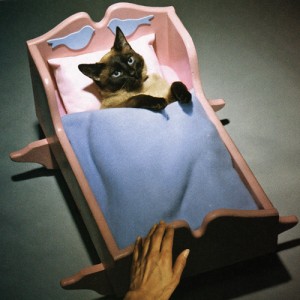
I wonder if our animals dream of going to live in the wild, or if the wild animals dream of coming to live with us….

A vegan seeks to avoid all use of animals for food, clothing, or any other purpose. But if you tell people that you are a vegan, they will often infer rather more. Some will hear “touchy-feely-hippy-freak,” some will hear “human-hating-animal-lover,” and some will hear “animal-hating-Animal-Rights-zealot.” For a word coined less than 70 years ago, “vegan” carries a great deal of emotional baggage.
Some of my best friends are vegan, as was I for many years. There are many compelling reasons to be vegan , including nutritional or religious beliefs and culinary preference. However, many vegans are motivated by the desire to do what is best for animals. Let’s examine the reasoning behind such “ethical veganism”:
Animals have the right not to be eaten:
This is a direct quote from one of the most respected legal scholars in the field. Seriously. Setting aside the matter of “rights” for a moment, let’s acknowledge inescapable reality: in nature, every animal dies and is eaten. All life depends upon death. If you truly love and respect Nature, you cannot reject its most central process. Not only is being eaten a virtual certainty for every animal, this vital biological mechanism provides food for every living animal: billions of animals make it through each day by eating the bodies of those who died the day before. Even when not ripped apart by a predator, animals are eventually consumed by small organisms that are then consumed by larger organisms. This is the cycle of life: you may celebrate this truth or lament it, but you cannot change it. If you could enforce the notion that no animals be eaten, in a few swift weeks life on Earth would cease.
Animals have the right to a life without suffering:
So absurd is this argument that it is astonishing that anyone might accept the assertion, yet it is the bedrock quicksand of the animal rights movement in general and PETA in particular:
- In the natural world, animals possess no rights, no protections, no guarantees. Rights are a human construct, conferred by society or god: this abstraction has nothing to do with nature.
- Even if we were to extend the general concept of rights to animals, one we could not grant would be “the right to life free from suffering.” No animal in the wild is free from suffering, nor is any human. A life free from suffering is not a right, but a fantasy.
- Life in nature is a struggle full of suffering – cold, heat, hunger, thirst, parasites, injury, illness, predation, conflict. Leave the confinement of your house and go live in the wild for a few months, then decide whether you prefer the “freedom” of the wild or the comforts of your home.
- If we pretend that a life without suffering were a reasonable goal, there is only one way to imagine achieving it: capture all the animals in the wild and bring them into our world and devote ourselves to ensuring that their lives are as free from suffering as possible. The only animals, including humans, that come close to life free of suffering are the millions of pampered pets whose every need and desire are met by doting owners, with the help of groomers, veterinarians, chiropractors, nutritionists, and others.
Animals deserve to be free:
Very few animals are free: their movements are curtailed by other animals’ ranges, by geographic barriers, by predators. Freedom is a human illusion—we are all constrained. More important, anyone who has spent time around animals knows that, with few exceptions, animals do not want to travel: they want to establish a home range and stay there, safe and comfortable. If their range happens to be defined by fencing, and if within that range all their needs are met, animals do not yearn for some hypothetical freedom.
Animals deserve the longest possible life:
Life in nature is seldom long. Most wild animals die well before maturity, and few live long enough to see old age. If you believe that animals deserve the longest possible life, you cannot simultaneously believe that they should be in the wild: captive animals indisputably live considerably longer than wild animals.
Animals deserve a humane death:
Death in nature is rarely pleasant, never “humane.” Most animals in the wild die with little comfort. Whether they starve to death, are taken down by predators, succumb to illness, or meet one of numberless other fates, the end is often slow and agonizing. It may be comforting to imagine that predators kill with merciful speed, but anyone who has ever watched a cat play with a mouse, or seen footage of a killer whale flinging a seal into the air, a pack of wolves eviscerating a still standing ungulate, knows that natural deaths are often brutal. If you believe animals deserve a humane death, you cannot simultaneously believe they should be in the wild.
Humans are no better than animals and therefore should not eat them:
I am not sure this argument is valid—while we may not be better than animals, human consciousness is clearly different than that of most animals and might therefore obligate or entitle us to behave differently in certain situations. However, even if we accept the idea that humans are no different than animals, it would follow from this that we are not constrained to behave differently from the rest of nature, in which case we would be no more obligated to veganism than any other animal. Ethical vegans often suggest that meat-eating humans are misguidedly arrogant, that people who eat meat must believe they are superior to animals in order to ignore their suffering and consume them—that eating animals requires perceiving them as commodities. And many meat eaters fall into this logical trap, defending their right to eat meat by quoting scripture about man’s dominion or making arguments about our moral or intellectual superiority. However, these arguments are backwards. It is arrogant to imagine that we are so qualitatively different from the rest of nature that we should eschew its underlying truths. Do we really imagine ourselves so divine that we should remove ourselves from the very cycle of life? We eat, we are eaten. Our bodies are all commodities for animals yet to come.
Exploitation is wrong:
Even accepting this assertion, very few human:animal relationships are exploitive. On the contrary, they are mutualistic: both species experience an increase in quality of life and survivorship. In fact, many human relationships with pets are amusingly close to pure exploitation of the human: the animal derives virtually all of the benefits. Many humans take such good care of their animals that their charges’ life expectancies are two to three times greater than those in the wild; and their lives are not only more comfortable but pampered. Even many animals kept for food are exceptionally well cared for and live longer than an average wild lifespan. They are not exploited, they are well compensated .… (The vegan notion of exploitation is so broad that using the bones of a long dead animal is considered exploitation, keeping a sheep and providing her with a great home, protection from predators, food, veterinary care, fresh water, and anything else she wants, and in exchange taking her wool that would fall off anyway and will grow back is seen as exploitation.)
Animals “belong” in the wild:
Animals belong in the world. As the world has changed, so have animals. Whatever the wild was before mankind arrived, it exists no longer. Do not condemn the animals of the world to die as we inexorably alter the planet. Allow them to evolve and to become a part of our new world: it is their only option, and is also full of luxuries and benefits: plentiful food, medicine, warmth, pillows…
Species we eat are “worse off” than species we do not:
Not so. Species that we use for food or other practical purposes fare far better than species providing no tangible value to mankind. While a few exceptional species – mostly scavengers like rats and roaches – have thrived alongside mankind, in general as our numbers have increased, the populations of other animals have declined, many of them to the point of extinction. It is predicted that half of the mammal species on the planet today will be extinct in fifty years. On the other hand, species that have tangible value to mankind have flourished: dogs, cats, horses, chickens, cows, pigs, etc. Unquestionably some individuals of these species have bad lives, but the species have flourished, and many of the individuals have had great lives. (As an interesting side note, one could argue that species kept by humans are injured genetically: they lose certain abilities over time, such as chickens that can no longer fly. However, this argument essentially demonstrates that captive lives are easier than wild lives: in captivity, species become less fit because human caretakers free them from the environmental pressures that normally keep them from devolving, just as humans have become largely incapable of surviving in the wild, having adapted during generations of civilization’s comparative ease.
Individuals we keep to eat are worse off than those we do not:
Sometimes this is true, often not. In aggregate, we cannot know. Consider my chicken Sasha as an example. Of course she would never have been born if we did not keep chickens, but even if she had, she would have likely been eaten in her first few weeks by a predator, or starved to death her first winter. Had she survived long enough, she would have been cold, hungry, wet, and miserable, until she reached her maximal life expectancy in the wild a few years later and died, likely eaten while still alive by a weasel, hawk, or bobcat. Because I eat eggs, or more accurately I feed most of them to my other animals, she has spent 10 years in a perfect yard, protected from all predators, with a warm room for winter, healthy food and vitamin supplements, with all the room she wants, dirt to scratch in, bugs to eat, other chickens for companionship, rocks to keep her nails trimmed, a disco ball making lights on the ground to chase, virtually no parasites, veterinary care if needed, shade and mist on hot days, etc. Even if I had eaten her years ago, she would have had a longer life, and a life far more full of happiness and free of suffering, than she would possibly have had without a human caretaker.
Not eating meat will have a practical impact on the meat production industry:
I believe this is the most interesting and compelling argument – both in favor of veganism and against. The basic argument is: regardless of all the theoretical and philosophical rhetoric above, we have seen what happens when humans raise animals for food, and it is not pretty. We have seen over and over in many different industries that when there is profit involved, some people will sacrifice the welfare of their employees and their animals in order to maximize gain. Perhaps humans will someday evolve their thinking so that greed motivates good behavior because people recognize that being happy is more valuable than being wealthy and that the path to happiness lies through good behavior rather than profit, but for now, we need practical solutions.
In the real world, we must devise ways to prevent greed from driving bad behaviors. This is true in every animal venture where profit is involved: breeding, racing, ranching, pet stores, and the rest. The behaviors driven by profit are generally inconsistent with the best interests of the animals, and we need to find ways to prevent greed from motivating abuse or neglect. Historically, two tools have been effective: legal mandates for minimal care and consumer demand for improved processes.
Legal mandates on minimal care similar to minimum wage, child labor laws, and nursing home standards, for example, are likely essential to prevent the worst cases of outright abuse, and such abuse and neglect laws already exist in most states, and of course, depend upon effective enforcement.
Possibly the most effective tool we have to influence how captive animals are cared for is how we consumers allocate our dollars. Dolphin-safe tuna, conflict-free diamonds, organic foods: it is clear that if consumers demand and are willing to pay for a process improvement, suppliers will meet that demand. Let us imagine that everyone became vegan tomorrow: millions of animals would be immediately “unemployed” – and soon killed or turned loose into the wild where they would suffer and die; and billions of animals would never be born in the future. On the other hand, if instead of becoming vegan, everyone tomorrow demanded humane treatment for animals in captivity, and only purchased humanely raised meat, suddenly raising meat humanely would be profitable, and raising meat inhumanely would become competitively unprofitable. Billions of animals would enjoy pleasant lives before eventually being eaten, the ideal life for any animal. Such decisions would yield a far more realistic outcome: many more people would pay extra for humanely raised products than would renounce meat altogether. And as the human population increases and we need more and more food, animal consumption is likely to increase, not decrease.
Eat meat, do not eat meat. It matters not to the animals of the world. They do not care whether they are eaten by you or some other animal, although you are hopefully persuaded by the arguments above that eating meat is neither immoral nor necessarily harmful to animals.
But strict ethical veganism goes much further than not eating meat: its partisans argue that it is ethically essential to exclude all usage of animals for food, clothing, entertainment, companionship, or any other purpose. This means no beloved pets, no captive breeding programs of endangered species, no wool sweaters. “Better dead than caged,” they say. “The world is our cage,” I say, “let us enjoy it together, happily coexisting on farms, in living rooms, or even in comfortable enclosures.”
Animals today face a threat far graver than being eaten. Their historic habitats are being destroyed while misguided animal lovers work tirelessly to eradicate every viable alternative existence for animals in the 21st century, relegating them to survive only in an imaginary realm where they are blissfully free, never die, have no interaction with humans, and are never eaten. Do not protect their illusory rights by sacrificing their comfort, their safety, their very survival.

“Do exotic animals make good pets?” is one of the most common sentences I hear, often with the words
“exotic animals” replaced with a particular animal, and there is never a good answer because it is the wrong question! There is broad array of animals and an even broader array of human preferences, so the right question is, “Would this particular type of animal make a good pet for me right now?”
Let me clarify this with a metaphor: Is a Ferrari a good car? If you are looking for a reliable vehicle that gets good gas mileage, has low cost of ownership, and can transport your children to soccer practice, NO! If you are looking for a safe vehicle for your reckless 17 year old son, NO! If you are looking for a beautiful Italian sports car that goes very fast and impresses the ladies, YES! Is a Ferrari dangerous? That depends entirely on the driver. Most people should not get a Ferrari, but for those who should it is a perfect choice. Same thing with any animal, domestic, wild, or exotic—if the particular animal fits into your lifestyle and you understand and accept the compromises required to care for that animal, you can have a wonderful and safe experience that is deeply rewarding for both you and the animal. If you do not fully understand what you are getting into, there is a high likelihood that both you and the animal will be miserable…
Speak candidly with as many people as possible who have experience with the animal you are considering, and gather as much information as you can about the pros and cons of the animal. Be honest with them about your lifestyle, personality, and concerns, and listen carefully to everything they say. Spend some time around a few animals that are similar to what you are considering, and not only for a few minutes on their best behavior—offer to help clean cages, give them a bath, babysit for a weekend, whatever you can do to really understand what life with this animal is like. Once you understand the negatives, you need to do three things carefully:
1. Envision the worst case scenario. You will likely do better than the worst case, but maybe not, so be prepared! Listen to all the negatives and imagine that you get an animal that does ALL of the worst things you hear. Think about these negatives in the context of your preferences—are you tidy, quiet, like to sleep late, squeamish about feeding certain things, etc. Will you still be happy with that animal?
2. Really, carefully imagine what those negatives mean over the lifetime of the animal. It is easy to say that you do not mind being kept up overnight by noise, but by year seven you may not feel the same way. It is easy to say you do not mind odor, or cleaning up many times per day, or having your couch chewed up, but imagine how you will feel when you have been living with that negative for years. When I got a crow, I was warned that they poop lots. Big deal, I have plenty of animals that poop lots… But a few years later, it IS a big deal. I change my shirt 10 times every day, and mop the floor and wipe the couch and clean the wall and the seats in the car… How will you feel about those negative later if you get married or have children? How will you feel when you cannot go on vacation because you cannot find anyone to watch your animal? Genuinely and carefully think about this…
3. Research the laws and regulations concerning the animal you want to own. Federal, state, county, city, etc. Make sure that you understand the rules so you do not risk yourself or your animal by breaking them.
All of these issues should be exactly the same whether you are getting a goldfish, cat, dog, monkey, wolf, or lion. If you go through these steps and are certain that you are prepared to live with the animal for its lifetime and make the requisite compromises, then you and the animal will likely have a wonderful experience. Do as much research as possible, find a responsible breeder who has great animals and will give you support, get everything set up, and go for it! But if you are at all unsure, take more time to think about it: this is an important decision that will impact you and the animal for many years to come…
The central notion of the Animal Rights movement is that “animals deserve consideration of their interests”. Let us consider captivity as it relates to the interests of animals:
There are an wide range of natural lives and captive lives, and one can easily and misleadingly look at the best example of either and compare it to the worst example of the other and reach whatever conclusion one wants to reach. Too often people compare the very best and most idyllic moment in a wild life with the worst example of atrocious captivity, and reach a skewed conclusion. For the sake of this article I am going to try to compare an average wild life with an average captive life. Since the question is whether or not captivity can be in the best interests of animals, we need to look at a reasonably good example of captive life to decide whether or not it can be a good life and if we believe it can then we can turn our attention to determining what conditions need to be met.
The natural life of a wild animal is rarely the idyllic picture that Disney, your parents, and some animal rights advocates would like you to believe. Nature is harsh and unforgiving, and most wild animals live very difficult lives. They are almost always inundated with fleas, ticks, intestinal worms, heartworms, and other parasites. They are plagued by flies and mosquitoes. They spend much of their life without enough food or water, or drinking brackish filthy water. They are often hunted and killed by animals of other species. They are often dominated or attacked by members of their own species over territorial or mating disputes. They are uncomfortably cold and wet or hot most of the time. They are unvaccinated against even the most common diseases and their injuries and illnesses go untreated and are often agonizing and eventually fatal. They are shot, poisoned, leg-trapped, or struck by cars. They are under constant stress and are always held captive by geographic boundaries or other animals’ ranges. They are often bred every season regardles of their health, and many of their offspring die. A wild animal’s life expectancy is generally less than half what it would be in captivity and much of that time is full of fear, stress, and discomfort.
A reasonably well cared-for animal has a very different life: it has ample space without threat of predation. It has clean, fresh water at all times. It is fed high quality balanced meals regularly and given vitamins, supplements, and treats to ensure maximal health. It is kept close to an ideal temperature at all times, and has dry clean bedding. It rarely encounters any parasites. It is given excellent preventative care, and any injury it sustains is treated immediately and pain management is provided. It is exercised regularly and given lots of enrichment so it is not bored. If appropriate it is housed with other compatible animals so it has companionship without risk. It is weighed and bathed. If needed it may receive massage or chiropractic treatments. Many captive animals are never bred, but those that are often are bred at comparatively infrequent intervals and given superlative prenatal care and their offspring have a very high likelihood of surviving. A captive animal’s life expectancy is generally two to three times longer than that of their wild counterparts, and for much more of their lives they are healthy, robust, and comfortable.
The only intrinsic difference between a wild animal and a well-kept animal is that the captive animal has a person dedicated to tending to its every need. If a captive animal were cared for in a manner identical to “nature”, the owner would be arrested for neglect and abuse immediately.
Very few adult humans chose to live a “wild” life. While we value our freedom dearly, we also value health and comfort and convenience. (Humans who value freedom so highly that they forego comfort to live without walls are called “homeless”, and most of us do not consider their choice optimal)
Over the years we have had several animals who came to us at a young age from the wild due to injury or accident whom we have raised as citizens of both worlds. We live far out in the woods and let them come and go at will. Not only did they stay, but also they spent the vast majority of their time lying on the down comforter rather than being outside. The only way I could get them to go act wild is to go out and call them and play with them, and as soon as I went back inside so did they. This is a well known issue in rehabilitation—one must be careful not to let the animal acclimate too much to captivity or they will prefer a comfortable captive life to the wild and will become unreleasable.
Some people argue that captivity is bad and all animals deserve to be wild and captive animals should be freed or eradicated. The point of this post is to honestly and carefully consider that view: animals have lives in captivity that are every bit as rich and full as in the wild, and in general they are longer, healthier, more comfortable, and by any practical criteria better.
Animals do indeed deserve consideration of their interests, and it is unmistakably clear that, if we can look past our preconceptions and biases, captivity is often the very best life to achieve those interests.
You have entered into a very exciting moral contract with a dog. It will be a rewarding adventure full of joy and learning, and in all likelihood you will get far more than you give. But it is also a serious lifelong commitment to caring for another being. While that commitment has many components, one of the first questions you need to consider is safety: how will you at all times keep your pet safe while providing him with a rich and full life.
People imagine that animals are like Disney characters, but they are not–your pet does not know about our laws or technology or the consequences of his actions. He does not know that we think killing cats or sheep is wrong or that using teeth to communicate is unacceptable. He does not know that ethylene glycol is toxic, or chocolate or raisins or xylitol or… He does not know that if he eats a sock he will impact. He does not know that people intruding on his territory need to be tolerated most of the time. He cannot make good decisions on his own. He will get into trouble in every way you can imagine and in many ways that you cannot. He has instincts and fears that can override almost any training, and in the wrong situation he will bite someone. It is your job to keep him safe even when unexpected events occur, and even when his actions work against you. Remember that other people will do things that make little sense—they will stick their hands into your car to pet your barking dog, they will let their kids run up and jump on your dog, they will trespass. They will steal your dog or poison him. They will set him free for his own good. Think of it like defensive driving—assume there are evil crazy people out there trying to get your dog to bite them. And assume that if he ever injures someone he will be blamed no matter how absurd their actions were. I am not being cynical, and none of this may occur in your life, but you need to be prepared for any of these occurrences.
Any time you go anywhere, survey the area for potential hazards—wild animals, people, horses, cars, trains, broken glass, rattlesnakes, mushrooms, foxtails, fire, birds, yellow-jackets, whatever. Then be unwaveringly vigilant for approaching distractions or hazards. Learn to keep one eye on your animal at all times and one ear out for hazards. Expect the unexpected—assume that at any moment a loud noise could frighten your animal, or a rabbit could run across his path, or another dog could come running up to play or fight. Imagine anything that could happen and have a plan!
Anytime he is unattended at home be sure his environment is safe. Again, anticipate the unexpected. Can he open a window and jump out, can he get to and eat anything, is there any chance of someone entering the house when you are not there. Does he have a collar on that could get caught on something? If you cannot make the environment safe at a particular moment, use a crate or a secure enclosure. Look carefully at every fence, gate, door, window, etc. for any potential for egress. Never rely on other people to close gates or respect unlocked doors. Imagine anything that could happen and have a plan.
This may sound impossible—people are not perfect, and sooner or later you will miss something, and disaster will strike. And it may sound onerous. But in truth it is possible and relatively painless—it simply requires that you practice processes and habits of vigilance, and it soon becomes second nature and unconscious—good parents do it regularly, as do pilots and surgeons and drivers and…
Even as years go by and you come to trust your dog deeply, never allow yourself to become complacent. The most common words after a dog related tragedy are almost certainly, “He never did that before…” You always need to anticipate what could happen next which may never have happened before. Habitual vigilance takes very little effort, so cultivate the habit and keep your dog safe.
You may notice that I advise vigilance not avoidance. This is a very important distinction because almost as often as people fail to keep their dogs safe they overprotect them into illness and boredom or simply make themselves and their pet miserable. You cannot avoid all risk for your pet—his life should be fun and rich and rewarding, and almost everything you do will introduced an element of risk—going for a drive, playing with other animals, running in the woods, chewing on a stick, eating raw food, everything fun is also somewhat dangerous. And you should not live in fear or avoid doing fun things with your animal. You should simply be aware—always be mindful and make the choices consciously. Decide, with full awareness, which rewards are worth the attendant risks, and never endanger your dog carelessly or take his safety for granted.

Recent Comments