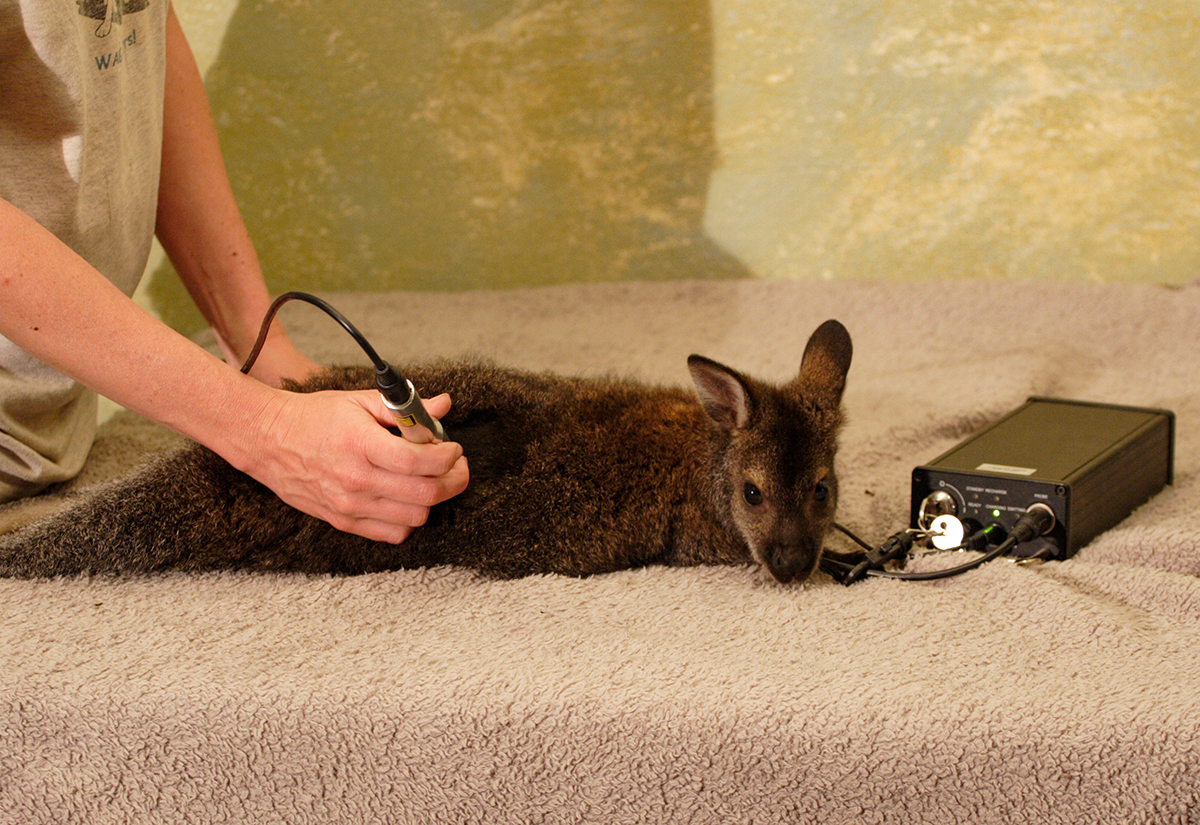
On February 24, 2010 in SeaWorld’s Shamu Stadium in Orlando, Florida, animal trainer Dawn Brancheau was pulled under the water by an orca. A few minutes later, Dawn was dead. Subsequent discussion in the media and around the Net has focused on the keeping of orcas and the dangers of working with powerful predators.
Profoundly missing in this discussion is Dawn’s voice.
I cannot speak for Dawn, but I can share with you the professional animal trainers’ perspective. You see, we all understand a common truth, and when an event like this occurs, we talk late into the night trying to figure out how we can effectively share that truth with others – how we can explain why, as Roy Horn was slipping from consciousness in the jaws of Mantecore the tiger during a Las Vegas show, he was saying over and over, “Please don’t hurt the cat… .”
Animal training is not a job, not a hobby, not an interest. It is an all-consuming passion. Those of us who devote our lives to working with animals love what we do beyond reason. We work 365 days a year, and when we are not working with animals, we are playing with them. We forego vacations, families, nice clothes, tidy homes, and most social activities to spend our lives with animals. We spend countless hours talking about how to care for animals, we get up every few hours to bottle-feed baby creatures, we spend all our money on animal care, and we use most of the rooms in our homes for something animal related. We are joyously consumed by our chosen path, and when an animal causes one of us injury or death we are sad, but hold no ill-will towards the animal. Let me explain.
We work with animals – not Disney characters, or humans wearing fur costumes – but real animals with real teeth and claws and immense power who behave according to their animal natures. We know that our chosen vocation is extremely safe based on the number of people harmed, but we also recognize that it entails real risk. We believe that life is an adventure we cannot authentically live solely by avoiding those things that might result in failure, injury, or death. Some people climb mountains, race cars, surf, pilot airplanes, luge, or share their lives with animals, and each of these journeys poses risks, although in truth people are far likelier to die in traffic accidents or childbirth than in any of these more dramatic undertakings. Sitting at home on a couch may indeed be a safer choice, but living a rich and full life and owning our own choices and their consequences are worth a little risk.
When accidents occur, people often want to examine the details and motivations of an animal’s behavior to understand exactly what happened and why. Careful investigation and analysis is a valuable process to allow us to improve our techniques and avoid needless future accidents, but in truth we can rarely know precisely why an animal behaved in a certain way. In a very real sense, however, such speculative detail does not matter: whether the animals were attacking, trying to protect themselves, sexually aroused, responding in annoyance to excessive pressure or fear, or some other miscue, the stark truth is that any of these circumstances could have arisen with similar outcomes. Many animals are vastly more powerful than humans: given sufficient time, wherever humans and animals interact, injuries may occur.
People who argue against working with animals often assert that certain animals are “unpredictable,” a completely erroneous claim. Each species, and each individual animal, is endowed with a well-established range of behaviors and rarely acts in conflict to these. Understanding and correctly predicting animal behavior is among the most basic challenges and responsibilities of any trainer.
Animals are often held accountable for their actions, a profoundly wrong conclusion: animals are not subject to “blame”: they always and simply act as animals, and people are responsible for minimizing situations in which harm might come to anyone.
Underlying the common reaction to traumatic animal incidents lurks a contemporary human expectation that the world should be “risk-free.” As human enterprise has relentlessly expanded, we have paved, denuded, and sanitized huge portions of the planet. In virtually every populated environment, we have effectively eliminated any predator that might pursue us. We fully expect handrails and padding and signs to protect us at all times. But nature cannot and should not be completely tamed. When we venture into the wilderness, or bring a piece of the wilderness into our world, we find that bears, wasps, mountains, skunks, waves, tigers, and orcas do not respect our notion of sovereignty and will behave as they have behaved since time immemorial. Innate animal behavior is not amenable to human moralizing: it is neither good nor bad. It is simply a truth that we must understand if we wish to interact with the natural world. Each day, millions of animals safely coexist with man. Many visit schools, perform tricks, and lounge around. For hundreds of shows, Roy’s tigers reliably came on stage and performed perfectly. Such numberless days of productive and enriching interaction cannot be forgotten as we scrutinize the day someone is injured.
Why is it that when people die in automobile accidents we do not seek to ban cars? Or when people die on mountains we do not seek to outlaw mountain climbing; but whenever someone is injured by an animal there is such an outcry? There are four reasons:
1. Animal attacks are rare, which makes them dramatic and newsworthy.
2. Few people actually work with animals or experience them firsthand: and it is much easier to blame, condemn, and legislate out of existence something you do not understand and that does not directly affect you.
3. Over millions of years of evolution, hominids developed a powerful innate fear of being eaten.
4. Human society is plagued by uninformed zealots always ready to twist any event to serve their purpose:
The loudest voices heard in the wake of traumatic animal incidents are those of Animal Rights advocates who aspire to outlaw all animal ownership and who seize any tragedy as an opportunity to chant their mindless rhetoric: “these animals ‘belong’ in the wild. This death proves it…” No. By now every thoughtful reader should realize this is simply hogwash. Nearly every species of animal can be superbly maintained in captivity where they are enabled to live rich lives that are longer and more comfortable than in the wild. We can learn from such creatures and enjoy them and share them with millions of people – especially young people – who will grow to care about the natural world. These animals are not demeaned or mistreated and are not yearning for freedom. They have plenty of space, excellent nutrition and fabulous lives. The only people who believe these animals have bad lives are people who have little experience with them and are forming their opinions based on uninformed sentimentality–people with genuine expertise quickly learn that these animals have excellent lives. The accidental death of a person who devoted herself to the well-being of captive orcas does not prove that orcas cannot be kept humanely, and the propagandists at PETA should be profoundly ashamed for using trainer Dawn Brancheau’s death to preach their own agenda, an agenda rejected and reviled by every thoughtful animal trainer.
As a professional working every day with powerful predators, I do not fear for my life; rather, I fear that should I be injured or killed by an animal, people who espouse “rights” but care nothing for actual animals will use such an event to harm the very animals I have spent my life cherishing.
We love these animals completely, even when their nature does not accommodate human society, and even when their actions harm us. They share their worlds with us, and in doing so bring immeasurable joy to our lives. We are afraid, not of them, but for them. We want them to be preserved in the wild and in captivity by skilled and dedicated experts, and we want people to stop being enraged when they behave like animals.
All the lives of all the animal trainers ever lost working with animals is a number far smaller than the number of children who starved to death while you were reading this article. Working with animals is safe and immeasurably beneficial for the humans and animals. If you really want to help someone, focus on providing food and healthcare to the millions of people who absolutely will perish without your help, and leave those of us who love animals to make our own well-informed decisions about how to balance our safety with our passions.
I am heading outside now to play with my beloved animal friends. I may make a mistake, and I may die. If so, please do not mourn the manner of my death. Do not blame the animal. Do not imagine that I was an idiot, or naively unaware of what could happen, or thought myself invincible or protected by the animals’ love. It is the life and death I chose, and lived without regret. A lifetime full of joy, passion, and wonder shared with many magnificent animals whose lives were also full of joy. Whenever and however I die, I have been blessed to live my dream.
Last week, arguing that orcas should not be kept in captivity, PETA president Ingrid Newkirk lamented that captive orcas are “swimming in their own diluted urine.” A perfect metaphor for the insanity of Animal Rights: apparently she believes that wild orcas all use a giant toilet where they flush their urine away…
“Don’t be silly,” some may say, “in the ocean there is lots of room for the urine to dissipate whereas an aquarium is much smaller.” This is emblematic of the sort of “facts-be-damned” thinking PETA endorses. Simple truth: the water in any U.S. orca habitat is orders of magnitude cleaner than the water in the ocean. It is filtered, UV sterilized, chemically balanced, and checked several times a day.
If you believe orca’s should not have to swim in dirty water containing dilute urine, by all means get them the heck out of the filthy ocean and into a clean aquarium…
In the same interview, Bob Barker explained that the enclosures orcas are kept in are equivalent to putting a human in a bathtub. Really? When is the last time you were able to swim at full speed in your bathtub? Dive many times your height below the water and then leap into the air more than twice your height? Maybe in Bob Barker’s bathtub… Simple truth: orcas are kept in habitats costing tens of millions of dollars, their diets are superlative, their exercise and enrichment plans among the best in the world, and the irrefutable reality is that they live longer in captivity than in the wild. Cetologists and trainers at Sea World have been instrumental in protecting these animals in the wild and in captivity, and have provided more knowledge and funding to help orcas than almost anyone else in the world while also fostering interest and passion for these animals in tens of millions of children. Bravo!
Mr. Barker also spoke about how “demeaning” it is for an animal to have to perform tricks for the entertainment of humans. This is absurd. An animal learns a behavior and it does that behavior and receives praise and reward. This exercises their bodies and their minds, and is in no way demeaning to the animal. Animals make no value judgments about whether doing a flip befits their social standing—they simply do the behavior and have a great time. It is a game, one that they play in the wild as well, and one they can stop anytime they want. Perhaps Mr. Barker is simply projecting his life onto the animals—he DID spend his life performing in front of the masses in exchange for a great deal of money which he now seems determined to spend ruining the lives of as many animals as possible.
HSUS is now lobbying to have Tilikum the orca released to the wild. They want to repeat the Keiko adventure which generated many donations. You remember Keiko, the orca who was taken at great expense from his nice Oregon enclosure where he was healthy and happy and turned loose into the wild where he pined away for months following boats and swimming into bays looking for any friend who would feed him fish and rub his belly as he remembered from his days in captivity. Until he finally died with pneumonia, starving and lonely. Yes, let’s do that again! Because animals deserve to be in the wild…
Today was one of those days when you try to stay inside. We mulled cider, finished decorating for Christmas, and played fetch in the living room. When we had to go outside to do chores we bundled up with mittens and hats. This is the first truly cold week of the season at our facility, and it has me thinking, again, about how technology benefits animals.
The most obvious benefit is simple heat—whether a propane heater, a wood stove, a baseboard heater, radiant flooring, or even just a roaring fire, how grateful we all are to be inside and warm. We take the dogs out for exercise several times a day, and they absolutely enjoy it, but after an hour they are back at the front door imploring us to let them get back to their comforters and heaters!
Closely related to warmth is dryness. Each of our animals has somewhere dry at all times, usually up to their knees in soft dry bedding—woodchips to straw, hog fuel to mattresses, pillows to down comforters. Even the luckiest wild animals are lying on frozen ground that melts and soaks their fur, leaving them with little protection against the cold ground that sucks the energy out of them.
Water is perhaps the hardest thing to ensure during the winter. Trough heaters and constantly running hoses, and we still end up carrying buckets of hot water several times each winter to keep warm water available. In the wild, outside of the fast moving rivers, there is just no water. The deer are licking a few drops of moisture off rocks, hoping to get enough to stay alive till the next thaw. This is particularly hard for ruminants whose stomachs do not do well with cold water.
Keeping them from slipping is also a challenge. On icy days we bring everyone inside—in the house or in stalls on rubber mats with bedding. Every spring, the first time we hike up our creek, we find the bodies of wild animals that tried to get to water and slipped and fell down the steep embankment and lay pitiably for hours with shattered limbs before being eaten or dying.
I write this article cuddled in my warm bed with dogs and cats while sipping cocoa. Looking over at Sequel, hogging the down comforter as always, I smile. Long ago, on a cold night like tonight, his ancestor took the first tentative steps out of the lonely dark to join my ancestor by the fire, and we are both immeasurably thankful. Our animals are all asleep; warm, with blankets and water and full stomachs. But I look out the window towards the woods and think about the many wild animals suffering. Some of them will find their way into our home, our pastures, or our vehicles, and some will have the reserves to endure the long bitter winter, but many will simply die—unable to find enough food or water and eventually succumbing to the brutal cold.
I wonder if our animals dream of going to live in the wild, or if the wild animals dream of coming to live with us….

A vegan seeks to avoid all use of animals for food, clothing, or any other purpose. But if you tell people that you are a vegan, they will often infer rather more. Some will hear “touchy-feely-hippy-freak,” some will hear “human-hating-animal-lover,” and some will hear “animal-hating-Animal-Rights-zealot.” For a word coined less than 70 years ago, “vegan” carries a great deal of emotional baggage.
Some of my best friends are vegan, as was I for many years. There are many compelling reasons to be vegan , including nutritional or religious beliefs and culinary preference. However, many vegans are motivated by the desire to do what is best for animals. Let’s examine the reasoning behind such “ethical veganism”:
Animals have the right not to be eaten:
This is a direct quote from one of the most respected legal scholars in the field. Seriously. Setting aside the matter of “rights” for a moment, let’s acknowledge inescapable reality: in nature, every animal dies and is eaten. All life depends upon death. If you truly love and respect Nature, you cannot reject its most central process. Not only is being eaten a virtual certainty for every animal, this vital biological mechanism provides food for every living animal: billions of animals make it through each day by eating the bodies of those who died the day before. Even when not ripped apart by a predator, animals are eventually consumed by small organisms that are then consumed by larger organisms. This is the cycle of life: you may celebrate this truth or lament it, but you cannot change it. If you could enforce the notion that no animals be eaten, in a few swift weeks life on Earth would cease.
Animals have the right to a life without suffering:
So absurd is this argument that it is astonishing that anyone might accept the assertion, yet it is the bedrock quicksand of the animal rights movement in general and PETA in particular:
- In the natural world, animals possess no rights, no protections, no guarantees. Rights are a human construct, conferred by society or god: this abstraction has nothing to do with nature.
- Even if we were to extend the general concept of rights to animals, one we could not grant would be “the right to life free from suffering.” No animal in the wild is free from suffering, nor is any human. A life free from suffering is not a right, but a fantasy.
- Life in nature is a struggle full of suffering – cold, heat, hunger, thirst, parasites, injury, illness, predation, conflict. Leave the confinement of your house and go live in the wild for a few months, then decide whether you prefer the “freedom” of the wild or the comforts of your home.
- If we pretend that a life without suffering were a reasonable goal, there is only one way to imagine achieving it: capture all the animals in the wild and bring them into our world and devote ourselves to ensuring that their lives are as free from suffering as possible. The only animals, including humans, that come close to life free of suffering are the millions of pampered pets whose every need and desire are met by doting owners, with the help of groomers, veterinarians, chiropractors, nutritionists, and others.
Animals deserve to be free:
Very few animals are free: their movements are curtailed by other animals’ ranges, by geographic barriers, by predators. Freedom is a human illusion—we are all constrained. More important, anyone who has spent time around animals knows that, with few exceptions, animals do not want to travel: they want to establish a home range and stay there, safe and comfortable. If their range happens to be defined by fencing, and if within that range all their needs are met, animals do not yearn for some hypothetical freedom.
Animals deserve the longest possible life:
Life in nature is seldom long. Most wild animals die well before maturity, and few live long enough to see old age. If you believe that animals deserve the longest possible life, you cannot simultaneously believe that they should be in the wild: captive animals indisputably live considerably longer than wild animals.
Animals deserve a humane death:
Death in nature is rarely pleasant, never “humane.” Most animals in the wild die with little comfort. Whether they starve to death, are taken down by predators, succumb to illness, or meet one of numberless other fates, the end is often slow and agonizing. It may be comforting to imagine that predators kill with merciful speed, but anyone who has ever watched a cat play with a mouse, or seen footage of a killer whale flinging a seal into the air, a pack of wolves eviscerating a still standing ungulate, knows that natural deaths are often brutal. If you believe animals deserve a humane death, you cannot simultaneously believe they should be in the wild.
Humans are no better than animals and therefore should not eat them:
I am not sure this argument is valid—while we may not be better than animals, human consciousness is clearly different than that of most animals and might therefore obligate or entitle us to behave differently in certain situations. However, even if we accept the idea that humans are no different than animals, it would follow from this that we are not constrained to behave differently from the rest of nature, in which case we would be no more obligated to veganism than any other animal. Ethical vegans often suggest that meat-eating humans are misguidedly arrogant, that people who eat meat must believe they are superior to animals in order to ignore their suffering and consume them—that eating animals requires perceiving them as commodities. And many meat eaters fall into this logical trap, defending their right to eat meat by quoting scripture about man’s dominion or making arguments about our moral or intellectual superiority. However, these arguments are backwards. It is arrogant to imagine that we are so qualitatively different from the rest of nature that we should eschew its underlying truths. Do we really imagine ourselves so divine that we should remove ourselves from the very cycle of life? We eat, we are eaten. Our bodies are all commodities for animals yet to come.
Exploitation is wrong:
Even accepting this assertion, very few human:animal relationships are exploitive. On the contrary, they are mutualistic: both species experience an increase in quality of life and survivorship. In fact, many human relationships with pets are amusingly close to pure exploitation of the human: the animal derives virtually all of the benefits. Many humans take such good care of their animals that their charges’ life expectancies are two to three times greater than those in the wild; and their lives are not only more comfortable but pampered. Even many animals kept for food are exceptionally well cared for and live longer than an average wild lifespan. They are not exploited, they are well compensated .… (The vegan notion of exploitation is so broad that using the bones of a long dead animal is considered exploitation, keeping a sheep and providing her with a great home, protection from predators, food, veterinary care, fresh water, and anything else she wants, and in exchange taking her wool that would fall off anyway and will grow back is seen as exploitation.)
Animals “belong” in the wild:
Animals belong in the world. As the world has changed, so have animals. Whatever the wild was before mankind arrived, it exists no longer. Do not condemn the animals of the world to die as we inexorably alter the planet. Allow them to evolve and to become a part of our new world: it is their only option, and is also full of luxuries and benefits: plentiful food, medicine, warmth, pillows…
Species we eat are “worse off” than species we do not:
Not so. Species that we use for food or other practical purposes fare far better than species providing no tangible value to mankind. While a few exceptional species – mostly scavengers like rats and roaches – have thrived alongside mankind, in general as our numbers have increased, the populations of other animals have declined, many of them to the point of extinction. It is predicted that half of the mammal species on the planet today will be extinct in fifty years. On the other hand, species that have tangible value to mankind have flourished: dogs, cats, horses, chickens, cows, pigs, etc. Unquestionably some individuals of these species have bad lives, but the species have flourished, and many of the individuals have had great lives. (As an interesting side note, one could argue that species kept by humans are injured genetically: they lose certain abilities over time, such as chickens that can no longer fly. However, this argument essentially demonstrates that captive lives are easier than wild lives: in captivity, species become less fit because human caretakers free them from the environmental pressures that normally keep them from devolving, just as humans have become largely incapable of surviving in the wild, having adapted during generations of civilization’s comparative ease.
Individuals we keep to eat are worse off than those we do not:
Sometimes this is true, often not. In aggregate, we cannot know. Consider my chicken Sasha as an example. Of course she would never have been born if we did not keep chickens, but even if she had, she would have likely been eaten in her first few weeks by a predator, or starved to death her first winter. Had she survived long enough, she would have been cold, hungry, wet, and miserable, until she reached her maximal life expectancy in the wild a few years later and died, likely eaten while still alive by a weasel, hawk, or bobcat. Because I eat eggs, or more accurately I feed most of them to my other animals, she has spent 10 years in a perfect yard, protected from all predators, with a warm room for winter, healthy food and vitamin supplements, with all the room she wants, dirt to scratch in, bugs to eat, other chickens for companionship, rocks to keep her nails trimmed, a disco ball making lights on the ground to chase, virtually no parasites, veterinary care if needed, shade and mist on hot days, etc. Even if I had eaten her years ago, she would have had a longer life, and a life far more full of happiness and free of suffering, than she would possibly have had without a human caretaker.
Not eating meat will have a practical impact on the meat production industry:
I believe this is the most interesting and compelling argument – both in favor of veganism and against. The basic argument is: regardless of all the theoretical and philosophical rhetoric above, we have seen what happens when humans raise animals for food, and it is not pretty. We have seen over and over in many different industries that when there is profit involved, some people will sacrifice the welfare of their employees and their animals in order to maximize gain. Perhaps humans will someday evolve their thinking so that greed motivates good behavior because people recognize that being happy is more valuable than being wealthy and that the path to happiness lies through good behavior rather than profit, but for now, we need practical solutions.
In the real world, we must devise ways to prevent greed from driving bad behaviors. This is true in every animal venture where profit is involved: breeding, racing, ranching, pet stores, and the rest. The behaviors driven by profit are generally inconsistent with the best interests of the animals, and we need to find ways to prevent greed from motivating abuse or neglect. Historically, two tools have been effective: legal mandates for minimal care and consumer demand for improved processes.
Legal mandates on minimal care similar to minimum wage, child labor laws, and nursing home standards, for example, are likely essential to prevent the worst cases of outright abuse, and such abuse and neglect laws already exist in most states, and of course, depend upon effective enforcement.
Possibly the most effective tool we have to influence how captive animals are cared for is how we consumers allocate our dollars. Dolphin-safe tuna, conflict-free diamonds, organic foods: it is clear that if consumers demand and are willing to pay for a process improvement, suppliers will meet that demand. Let us imagine that everyone became vegan tomorrow: millions of animals would be immediately “unemployed” – and soon killed or turned loose into the wild where they would suffer and die; and billions of animals would never be born in the future. On the other hand, if instead of becoming vegan, everyone tomorrow demanded humane treatment for animals in captivity, and only purchased humanely raised meat, suddenly raising meat humanely would be profitable, and raising meat inhumanely would become competitively unprofitable. Billions of animals would enjoy pleasant lives before eventually being eaten, the ideal life for any animal. Such decisions would yield a far more realistic outcome: many more people would pay extra for humanely raised products than would renounce meat altogether. And as the human population increases and we need more and more food, animal consumption is likely to increase, not decrease.
Eat meat, do not eat meat. It matters not to the animals of the world. They do not care whether they are eaten by you or some other animal, although you are hopefully persuaded by the arguments above that eating meat is neither immoral nor necessarily harmful to animals.
But strict ethical veganism goes much further than not eating meat: its partisans argue that it is ethically essential to exclude all usage of animals for food, clothing, entertainment, companionship, or any other purpose. This means no beloved pets, no captive breeding programs of endangered species, no wool sweaters. “Better dead than caged,” they say. “The world is our cage,” I say, “let us enjoy it together, happily coexisting on farms, in living rooms, or even in comfortable enclosures.”
Animals today face a threat far graver than being eaten. Their historic habitats are being destroyed while misguided animal lovers work tirelessly to eradicate every viable alternative existence for animals in the 21st century, relegating them to survive only in an imaginary realm where they are blissfully free, never die, have no interaction with humans, and are never eaten. Do not protect their illusory rights by sacrificing their comfort, their safety, their very survival.

The 2009 Legislative Session is probably the darkest hour for the animals of Oregon in my lifetime. Several of the most harmful bills I have ever seen are likely to pass.
I apologize for the tone of this post, but we must do better!!!
First of all, we are too disorganized. We did not get together and plan strategy, we did not rehearse our presentations together, very few of the people in the community spent much time meeting individually with their legislators. Almost every day that I was there I ran into HSUS people meeting with the legislators. Only a few times did I encounter people from our side. One-on-one meetings with legislators are one of our most effective tools. HSUS scheduled meetings with every legislator and sent their members to go persuade them with pictures and sad stories. Some of the people on our side who should have been most effective advocates and leaders accomplished too little.
We need to show them that we are 200,000 strong. We need to show up at the beginning of the session and show them our strength. We should have a huge event and fill the quad with agility and Frisbee and obedience and CERF and TTouch; booths educating them about proper dog care—what crates are, raw feeding, they need to see the magnitude of our industry and our passion, and they need to know the depths of our love for our animals. We need to have web-pages showing who has voted which way on animal votes so that voting the wrong way on animal bills will cost them votes. We need to have stronger relations with all the other animal groups in the state and we need to stand together. We need to have pictures and videos showing just how well multiple animal homes can care for their animals.
Most importantly, we are failing to communicate effectively to liberal animal lovers who believe that these bills are “for the animals.” I cannot stress this enough—anti-animal laws are being voted into effect by people who genuinely believe that they are helping animals. Throughout this session, it was unmistakably clear that our legislators do not know the current animal laws, do not know what is best for animals, and have no idea that they are attacking are the very best animal owners in the state while supporting groups that actively want to eradicate pet ownership. They just love animals and want to help them, and they have been persuaded that these bills are the way to help animals. We know that we love animals more than anyone, that we bring more knowledge, passion, and everyday hard work to improving the lives of animals than anyone. We need to bring them into that world and share it with them. They need to see through our eyes.
I am going to repeat myself here, but it is worth it: the people who voted for 2470 today were the animal lovers in the room. And many of the people there arguing for these bills were not bad people—they were also animal lovers who believe they are heroes—fighting to save animals in need. They voted because they want to stop puppy mills and did not really care about the current law or the details of the bill or the fact that it will not help and will in fact hurt. They genuinely did not understand that we want to stop abuse more than anyone and that we would be happy to help them create statutes that would work for every animal in the state based on quality of animal care, but that this bill is moving Oregon in the wrong direction by ignoring quality and focusing on numbers.
While it may be in our best interest to argue for property rights in legal venues, when it comes to persuading people, we need to find ways to get them to understand that we are NOT fighting for our privacy or our rights, we are fighting for the animals. Liberals will sacrifice your right to do what you want with your property if they believe doing so will protect puppies. As long as they believe that we are fighting for our rights, they believe that AR bills are defending the animals against our perceived “right” to harm the animals in pursuit of our selfish greedy desire to do what we want. We must find ways to show them that we are the ones protecting animals, not the AR people who are seizing and killing animals every day while we spend every moment making animals’ lives better…
Here is what I said to the judiciary committe on SB303A:
Good afternoon Chair and members of the committee.
My name is Roland Sonnenburg and I run a successful studio animal training business and have trained animals for hundreds of films, television shows and commercials. I have degrees in philosophy and physics with graduate work in animal science. I am a published author on animal ethics, care, and training, and have provided consultation and expert advice to National Geographic, Guide Dogs for the Blind, the Disney Company, and countless vets, trainers, and owners.
In candor, most of us here today are not objecting to SB303A per se. We are objecting to a larger picture of which SB303 is only a very small piece. Two sessions ago, OHS sought police officer status for its humane agents. That bill failed because OHS agents were not trained to the same level. Now, by passing SB303, OHS will ensure that their agents are trained to the same standards, so next session they can rationally attempt to achieve police status. Down the hall they are already pushing another bill that will grant them the power to obtain search warrants. These are each incremental steps toward completing their original objective of having full police powers. I am deeply appreciative of the important work humane officers do. I have donated my time and money to help OHS, and absolutely believe they should be empowered to educate and investigate and assist animals in need, but when it comes to obtaining warrants, seizing animals, or making arrests, these are actions that must only be undertaken by genuine law enforcement personnel.
There are two important reasons why OHS should not have a private police force:
First, while there may have been a time when humane officers were innocent and caring individuals with no agenda other than helping animals, that is not the case today. The humane society sells dogs and cats. They call it adopting or placing, but the simple fact remains that they take in a great deal of money each year in exchange for the animals they sell. This creates a conflict of interest with them having the power to go into people’s homes and seize their dogs. We have broad reaching, vague, and subjective laws like, “every dog must have continuous access to adequate exercise.” This means that any time a humane society wants to seize a particular group of dogs, they can simply assert that the dogs did not have continuous access to the outdoors. Time after time people have claimed that they were providing excellent care to their dogs, yet the Humane Society seized their dogs asserting neglect, and a few days later these same dogs are being sold and they are not underweight and appear to have been well treated and socialized. Of course the Humane Society kills the less cute ones and the entire event is publicized to generate sympathy and donations. Many times Humane Officers starkly threaten people with criminal charges if they do not turn over their dogs and the terrified people relinquish their property under duress. This is nothing more than extortion and neither our governor nor the DPSST should sanction such behavior. Every serious animal lover has at least one friend who has been targeted by humane agents and lost their animals and had their lives ruined. In many cases they are later vindicated in court, but it is too late and their animals are gone. OHS may claim that they do not behave this way, while many private owners will claim they do. But it genuinely does not matter. What matters is that no private group should have the power to get a warrant, enter someone’s home, seize the person’s property, and sell that property. Not only have you created a private police force, but also that force has a financial incentive that is directly contrary to impartiality. It is not possible for Humane Societies to simultaneously generate revenue by selling dogs and have officers empowered with deciding whose dogs will be seized.
The second issue is that while Oregon Humane is not officially associated with any Animal Rights organization, the private individuals who work for OHS are often committed to the Animal Rights ideal. Just a few moments ago, the director of OHS went out into the hall to confer with the Oregon director of HSUS. You must understand that the animal rights movement believes NO animal should EVER be captive, and they have stated over and over again that they are willing to infiltrate, lie, terrorize, burn and even kill in order to achieve their goal.
Many people who would like to be here today were afraid that if they speak publicly the people you want to give more power to will target them and seize or kill their animals and terrorize them.
You must understand that these people are not interested in helping animals—they are committed to animal RIGHTS. Rather than try to tell you who these people are that we do not want in our homes, let me simply share with you a few words from the presidents and leaders of HSUS, PETA, ADL, and other AR groups:
1. …. going onto their farms, releasing their animals and burning the place to the ground, that’s morally justifiable, in our opinion…—–Dr. Jerry Vlasak, Animal Defense League
2. Arson, property destruction, lying, burglary and theft are ‘acceptable crimes’ when used for the animal cause.—–Alex Pacheco, PETA
3. Animal liberation…is a war! It is an all-out bloody war….—–Robin Webb, Animal Liberation Front
4. I don’t think you’d have to kill — assassinate — too many … I think for 5, 10, 15 human lives, we could save a million, 2 million, 10 million non-human lives.—–Dr. Jerry Vlasak, Animal Defense League
5. If killing is the only way to stop them, then I say killing them would certainly be justified.—–Dr. Jerry Vlasak, Animal Defense League
6. In a war you have to take up arms and people will get killed, and I can support that kind of action….—–Tim Daley, British Animal Liberation Front
7. I don’t want to see another dog or cat born—–Wayne Pacelle, HSUS President
8. I would go to work early, before anyone got there, and I would just kill the animals myself….I must have killed a thousand of them, sometimes dozens every day.—–Ingrid Newkirk, President of PETA
9. I will be overjoyed when the first scientist is killed by a liberation activist.—–Vivien Smith, Animal Liberation Front
10. Breeders must be eliminated….If you know of a breeder in the area, whether commercial or private, legal or illegal, let us know and we will post their name, location, phone number—–Animal Defense League
11. ….keep your doggie or kitty friends away from mommy; she’s an animal killer!—–PETA comic book
12. Businesses are terrified. They have no idea what I’m going to do next.—–Ingrid Newkirk, President of PETA
13. Hit them in their personal lives, visit their homes… strike hard and fast and retreat in anonymity. Craig Rosenbraugh
14. I don’t approve of the use of animals for any purpose that involves touching them—–Dr. Neal Barnard
15. The children are enjoying a lifestyle built on the blood and abuse of innocent animals….They are a justifiable target for protest.—–Robin Webb, Animal Liberation Front
16. We will break the law and destroy property until we win.—–Dr. Steven Best
17. We have a 100 per cent success rate. Whoever we choose to target is finished.—–Heather James
I know this sounds maniacal, but that is the point—these are not my words, they are the words of the leaders of a movement with millions of members and annual budgets in the hundreds of millions of dollars. This is not conspiracy theory paranoia. Last month the FBI stated, “Animal rights pose a significant domestic terror threat. To date, extremists have been responsible for more than 1,800 criminal acts and more than $110 million in damages. Currently, we are investigating approximately 170 such extremist incidents across the country,” and their members have been regularly committed of felonies in furtherance of their belief that no animal should ever be captive. Oregon must protect its citizens from these people, not give them police powers and invite them into our homes. The only people who should have such access are police and sheriffs who are accountable to the public, enforce all laws equally, and are not motivated by the above agenda.
I am feeling lazy today, so I thought instead of writing a blog I would let the Animal Rights leaders write it for me. Since I have written several posts disagreeing with their agenda it seems productive to let them share that agenda in their own words. In fairness, there are several different attitudes within the Animal Rights movement, so I have tried to select a few quotes from each of the major players so as to present a representative cross-section of their beliefs, and I am sure they would not all agree with every one of these quotes.
So, without further ado, here are the words of the leaders of the animal rights movement:
In fact, I don’t want to see another dog or cat born—–Wayne Pacelle, HSUS President
I despise ‘animal welfare.’ That’s like saying, ‘Let’s beat the slaves three times a week instead of five times a week’.—–Gary Yourofsky, PETA
I don’t think you’d have to kill — assassinate — too many … I think for 5 lives, 10 lives, 15 human lives, we could save a million, 2 million, 10 million non-human lives.—–Dr. Jerry Vlasak, Animal Defense League
I would go to work early, before anyone got there, and I would just kill the animals myself. Because I couldn’t stand to let them go through that. I must have killed a thousand of them, sometimes dozens every day.—–Ingrid Newkirk, President of PETA
I wish we all would get up and go into the labs and take the animals out or burn them down.—–Ingrid Newkirk, President of PETA
I would be overjoyed when the first scientist is killed by a liberation activist.—–Vivien Smith, Animal Liberation Front
Arson, property destruction, lying, burglary and theft are ‘acceptable crimes’ when used for the animal cause.—–Alex Pacheco, PETA
One generation and out. We have no problem with the extinction of domestic animals. They are creations of human selective breeding.—–Wayne Pacelle, HSUS President
If an animal has any rights at all, it’s got the right not to be eaten.—–Gary Franicione, legal scholar
….the only responsible breeders are ones who, upon learning about their contribution to the overpopulation crisis, spay or neuter their animals, and get out of the business altogether.—–PETA
Breeders must be eliminated! As long as there is a surplus of companion animals in the concentration camps referred to as shelters, and they are killing them because they are homeless, one should not be allowed to produce more for their own amusement and profit. If you know of a breeder in the Los Angeles area, whether commercial or private, legal or illegal, let us know and we will post their name, location, phone number so people can write them letters telling them ‘Don’t Breed or Buy, While Others DIE.’—–Animal Defense League
Even if animal tests produced a cure, we’d be against it.—–Ingrid Newkirk, President of PETA
If killing is the only way to stop them, then I said killing them would certainly be justified.—–Dr. Jerry Vlasak, Animal Defense League
If that means going onto their farms, releasing their animals and burning the place to the ground, that’s morally justifiable, in our opinion…There were always innocent people who got hurt somewhere along the way but it was important that those who oppressed one group of people be stopped, and we don’t see the animal liberation struggle being substantially different from these other struggles.… A sustained campaign against a particular industry or a particular organization has the potential to be quite effective.—–Dr. Jerry Vlasak, Animal Defense League
If the death of one rat cured all diseases, it wouldn’t make any difference to me.—–Chris DeRose, Last Chance for Animals
If you had to hurt somebody or intimidate them or kill them, it would be morally justifiable.—–Dr. Jerry Vlasak, Animal Defense League
In a perfect world, all other than human animals would be free of human interference, and dogs and cats would be part of the ecological scheme.—–PeTA’s Statement on Companion Animals.
In a war you have to take up arms and people will get killed, and I can support that kind of action by petrol bombing and bombs under cars, and probably at a later stage, the shooting of vivisectors on their doorsteps. It’s a war, and there’s no other way you can stop vivisectors.—–Tim Daley, British Animal Liberation Front
It doesn’t matter if there are people in there. They’re irrelevant! It doesn’t matter about the police. They’re irrelevant! It doesn’t matter about the high fences. They’re irrelevant! It doesn’t matter about the doors. They’re irrelevant! It doesn’t matter about the locks. They’re irrelevant! What matters is our brothers and sisters in there. Smash everything when the cops aren’t here! Get them out! We’ll sweep the police aside. We’ll sweep the government aside.—–Robin Webb, Animal Liberation Front
Let us allow the dog to disappear from our brick and concrete jungles–from our firesides, from the leather nooses and chains by which we enslave it.—–John Bryand, animal ethics author
My goal is the abolition of all animal agriculture.—–JP Goodwin, HSUS
Not only are the philosophies of animal rights and animal welfare separated by irreconcilable differences… the enactment of animal welfare measures actually impedes the achievement of animal rights… Welfare reforms, by their very nature, can only serve to retard the pace at which animal rights goals are achieved.—–Gary Franicione, legal scholar and Tom Regan, professor and author on philosophy
Nothing is more violent and radical than what’s being done to non-human animals in our society. If a researcher won’t stop abusing animals and is stopped physically, whether with the use of force, or is killed, I certainly wouldn’t lose sleep over that idea.—–Dr. Jerry Vlasak, Animal Defense League
The theory of animal rights simply is not consistent with the theory of animal welfare… Animal rights means dramatic social changes for humans and non-humans alike; if our bourgeois values prevent us from accepting those changes, then we have no right to call ourselves advocates of animal rights.—–Gary Franicione, legal scholar
We are not especially ‘interested in’ animals. Neither of us had ever been inordinately fond of dogs, cats, or horses in the way that many people are. We didn’t ‘love’ animals.—–Peter Singer, Animal Ethicist
We do not have the right to use animals for any real or perceived need, whether it be food, clothing, entertainment, medical issues.—–Janine Motta, NJ Animal Rights Alliance
Whatever it takes to stop someone from abusing animals is certainly morally acceptable.—–Dr. Jerry Vlasak, Animal Defense League
…no movement for social change has ever succeeded without ‘the militarism component’….Thinkers may prepare revolutions, but bandits must carry them out,—–Ingrid Newkirk, President of PETA
….we would like an end to pet shops and the breeding of animals.—–Ingrid Newkirk, President of PETA
A burning building doesn’t help melt people’s hearts, but times change and tactics, I’m sure, have to change with them. If you choose to carry out ALF-style actions, I ask you to please not say more than you need to, to think carefully who you trust, to learn all you can about how to behave if arrested, and so to try to live to fight another day.—–Ingrid Newkirk, President of PETA
Animal liberation, of which the anti-vivisection movement is a part, animal liberation is not a campaign. It is not a struggle. It is a war! It is an all-out bloody war, in which the countless hundreds of millions of casualties have, so far, all been on one side. How can we allow that to continue?—–Robin Webb, Animal Liberation Front
….they are like slaves, even if well-kept slaves.—–PETA
Ask your mommy how many dead animals she killed to make her fur clothes. Then tell her that you know she paid men to hurt and kill the animals. Everyone knows. And the sooner she stops wearing fur, the sooner the animals will be safe. Until then, keep your doggie or kitty friends away from mommy; she’s an animal killer!—–PETA comic book
Bank executives have had their yachts sunk behind their houses. Cars have been blown up; windows have been smashed; offices have been stormed. We’re tired of yelling at buildings — no one cares. We’re tired of yelling at executives while they’re in those buildings, and allowing them to go home and forget about us who are out there that afternoon — we’re going to their homes. We’re doing what’s effective. We’re shutting this company down.—–Lauren James
Businesses are terrified. They have no idea what I’m going to do next.—–Ingrid Newkirk, President of PETA
But it is also important to stop manufacturing pets, thereby perpetuating a class of animals forced to rely on humans to survive.—–PETA
Hit them in their personal lives, visit their homes . Actively target U.S. military establishments within the United States… strike hard and fast and retreat in anonymity. Select another location, strike again hard and fast and quickly retreat in anonymity … Do not get caught. DO NOT GET CAUGHT. Do not get sent to jail. Stay alert, keep active, and keep fighting.———-Craig Rosenbraugh
Humane care is simply sentimental, sympathetic patronage.—–Dr. Michael W. Fox, HSUS
I am not a morose person, but I would rather not be here. I don’t have any reverence for life, only for the entities themselves. I would rather see a blank space where I am. This will sound like fruitcake stuff again but at least I wouldn’t be harming anything.—–Ingrid Newkirk, President of PETA
I don’t have a hands-on fondness for animals…To this day I don’t feel bonded to any non-human animal. I like them and I pet them and I’m kind to them, but there’s no special bond between me and other animals.—–Wayne Pacelle, HSUS President quoted in Bloodties: Nature
I don’t approve of the use of animals for any purpose that involves touching them – caging them.—–Dr. Neal Barnard
I don’t use the word pet. I think it’s speciesist language. I prefer companion animal. For one thing, we would no longer allow breeding. People could not create different breeds. There would be no pet shops. If people had companion animals in their homes, those animals would have to be refugees from the animal shelters and the streets. You would have a protective relationship with them just as you would with an orphaned child. But as the surplus of cats and dogs (artificially engineered by centuries of forced breeding) declined, eventually companion animals would be phased out, and we would return to a more symbiotic relationship enjoyment at a distance.—–Ingrid Newkirk, President of PETA
I think violence is part of the struggle against oppression. If something bad happens to these people, it will discourage others. It is inevitable that violence will be used in the struggle and that it will be effective—–Dr. Jerry Vlasak, Animal Defense League
If an ‘animal abuser’ were killed in a research lab firebombing, I would unequivocally support that, too.—–Gary Yourofsky, PETA
If someone is killing, on a regular basis, thousands of animals, and if that person can only be stopped in one way by the use of violence, then it is certainly a morally justifiable solution.—–Dr. Jerry Vlasak, Animal Defense League
I’m not only uninterested in having children. I am opposed to having children. Having a purebred human baby is like having a purebred dog; it is nothing but vanity, human vanity.—–Ingrid Newkirk, President of PETA
It won’t ruin our movement if someone gets killed in an animal rights action. It’s going to happen sooner or later. The Animal Liberation Front, the Earth Liberation Front — sooner or later there’s going to be someone getting hurt. And we have to accept that fact. It’s going to happen. It’s not going to hurt our movement. Our movement will go on. And it’s important that we not let the bully pulpit of the FBI and the other oppression agencies stop us from what we’re doing. —–Dr. Jerry Vlasak, Animal Defense League
It’s not about loving animals. It’s about fighting injustice. My whole goal is for humans to have as little contact as possible with animals.—–Gary Yourofsky, PETA
My dream is that people will come to view eating an animal as cannibalism.—–Henry Spira
No strictly peaceful movement has succeeded in liberation, I think the animal rights movement has been restrained in its use of force, mostly because people in the struggle are often people of privilege who aren’t willing to risk losing that privilege. Violence has been a necessary component of every serious liberation struggle…Violence is not the only path to liberation, but likely an indispensable one…the Press Office would like to be clear on this matter: we support all the liberationists from the graffiti artists and ALF liberator to the Animal Rights Militia, Justice Department and Revolutionary Cells.—–Dr. Jerry Vlasak, Animal Defense League
Our goal is to make breeding like drunk driving and smoking.—–Kim Sturla, Fund for Animals
Perhaps the mere idea of receiving a nasty missive will allow animal researchers to empathize with their victims for the first time in their lousy careers. I find it small wonder that the laboratories aren’t all burning to the ground. If I had more guts, I’d light a match.—–Ingrid Newkirk, President of PETA
The bottom line is that people don’t have the right to manipulate or to breed dogs and cats … If people want toys, they should buy inanimate objects. If they want companionship, they should seek it with their own kind,—–Ingrid Newkirk, President of PETA
Their lives are restricted to human homes where they must obey commands and can only eat, drink, and even urinate when humans allow them to.—–PETA
There are about 2,000 people prepared at any one time to take action for us … The children are enjoying a lifestyle built on the blood and abuse of innocent animals. Why should they be allowed to close the door on that and sit down and watch TV and enjoy themselves when animals are suffering and dying because of the actions of the family breadwinner? They are a justifiable target for protest.—–Robin Webb, Animal Liberation Front
There are two main goals behind ALF actions. The first is obviously to remove as many animals as possible from fur farms, vivisection labs, and other areas of abuse. The second is to cause as much economic damage to these industries and persons as possible.—–Dr. Jerry Vlasak, Animal Defense League
Things are picking up…It’s not going to make this thing go away… don’t think you’re going to find anybody deterred…There’s a lot of people willing to die for the cause. —–Dr. Jerry Vlasak, Animal Defense League
Throughout the late ’80s, me and a handful of friends just like you people here, we started to break windows, we started to slash tires, we started to rescue animals from factory farms and vivisection breeders, and we graduated to breaking into laboratories . As long as we emptied the labs of animals, they were still easily replaced. So that’s when the ALF in this country, and my cell, started engaging in arson.—–Rodney Coronado, PETA fund recipient and convicted arsonist
To give a child animal products is a form of child abuse.—–Dr. Neal Barnard, Physician’s Committee for Responsible Medicine
We are not terrorists, but we are a threat. We are a threat both economically and philosophically. Our power is not in the right to vote but the power to stop production. We will break the law and destroy property until we win.—–Dr. Steven Best
We encourage others to find a local Earth raper and make them pay for the damages they are inflicting on our communities… Furriers, meat packers, bosses, developers, rich industry leaders are all Earth rapers.—–Craig Rosenbraugh
We have a 100 per cent success rate. Whoever we choose to target is finished.—–Heather James
We will be just as ruthless as any of our targets. We will go for the throat.—–Dan Matthews
Why should any one of us feel that ‘it shouldn’t be me taking that brick and chucking it through that window? Why shouldn’t I be going to that fur farm down the road and opening up those cages?’ It’s not hard; it doesn’t take a rocket scientist. You don’t need a 4-year degree to call in a bomb hoax. These are easy things, and they’re things that save animals: And so I want all of you in this room to, A) Question not just what is right and wrong, but what is effective, And B) why can’t all of us be doing it? I think the animal rights movement is strong – that’s my opinion. It’s time to start flexing our muscles.—–Kevin Kjonaas, Animal Defense League
Would I rather the research lab that tests animals is reduced to a bunch of cinders? Yes.—–Ingrid Newkirk, President of PETA
…eating animals involves an intentional decision to participate in the suffering and death of nonhumans where there is no plausible moral justification.—–Gary Franicione, legal scholar
Believe me, you don’t have to worry about prison. I’ve been there — it’s a doggle. You can put your feet up and recharge your batteries, and go back out there when you’re released and start all over again. You can go to education to read up. I mean someone, someone actually read up on electronics while they were in prison, and went out and started doing electronic incendiary devices. Use your time inside to teach yourself!—–Robin Webb, Animal Liberation Front
Come here when it’s dark, when there’s no moon, with people you can trust! There are individuals in there who need you to do that! But when you get them out, don’t leave the equipment or the building standing either! Smash it! Smash it! Smash it once and for all!—–Robin Webb, Animal Liberation Front
Here’s a little model I’m going to show you here. I didn’t have any incense, but — this is a crude incendiary device. It is a simple plastic jug, which you fill with gasoline and oil. You put in a sponge, which is soaked also in flammable liquid — I couldn’t find an incense stick, but this represents that. You put the incense stick in here, light it, place it — underneath the ‘weapon of mass destruction,’ light the incense stick – sandalwood works nice — and you destroy the profits that are brought about through animal and earth abuse. That’s about — two dollars. —–Rodney Coronado, PETA fund recipient and convicted arsonist
I maintain that we ought to abolish the institution and stop causing or facilitating the existence of more ‘companion’ animals.—–Gary Franicione, legal scholar
If they have me arrested, that’s good for me, bad for them. We have 75,000 members of our club who aren’t going to like it—–Dee Crenshaw
If we really believe that animals have the same right to be free from pain and suffering at our hands, then, of course we’re going to be, as a movement, blowing things up and smashing windows … I think it’s a great way to bring about animal liberation … I think it would be great if all of the fast-food outlets, slaughterhouses, these laboratories, and the banks that fund them exploded tomorrow. I think it’s perfectly appropriate for people to take bricks and toss them through the windows. … Hallelujah to the people who are willing to do it.—–Bruce Friedrich, PETA
In a perfect world, we would not keep animals for our benefit, including pets,—–Tom Regan, professor and author on philosophy
It is time we demand an end to the misguided and abusive concept of animal ownership. The first step on this long, but just, road would be ending the concept of pet ownership.—–Elliot Katz, In Defense of Animals
Liberating our language by eliminating the word ‘pet’ is the first step… In an ideal society where all exploitation and oppression has been eliminated, it will be NJARA’s policy to oppose the keeping of animals as ‘pets.’—–New Jersey Animal Rights Alliance
Our goal: to convince people to rescue and adopt instead of buying or selling animals, to disavow the language and concept of animal ownership.—–Elliot Katz, In Defense of Animals
Our nonviolent tactics are not as effective. We ask nicely for years and get nothing. Someone makes a threat, and it works.—–Ingrid Newkirk, President of PETA
Probably everything we do is a publicity stunt … we are not here to gather members, to please, to placate, to make friends. We’re here to hold the radical line.—–Ingrid Newkirk, President of PETA
Property destruction is a legitimate political tool called economic sabotage, and it’s meant to attack businesses and corporations.—–David Barbarash
The cat, like the dog, must disappear… We should cut the domestic cat free from our dominance by neutering, neutering, and more neutering, until our pathetic version of the cat ceases to exist.—–John Bryand, animal ethics author
Today’s terrorist is tomorrow’s freedom fighter.—–Kevin Kjonaas, Animal Defense League
We should stop bringing more domestic animals into existence.—–Gary Franicione, legal scholar
We’re a new breed of activism. We’re not your parents’ Humane Society. We’re not Friends of Animals. We’re not EarthSave. We’re not Greenpeace. We come with a new philosophy. We hold the radical line. We will not compromise! We will not apologize, and we will not relent! … Vivisection is not an abstract concept. It’s a deed, done by individuals, who have weaknesses, who have breaking points, and who have home addresses!—–Kevin Kjonaas, Animal Defense League
When you’re a 20-something grassroots activist, and you’re deciding how to spend your time and money to make a difference, it makes a lot of sense to cause a million in damage with just $100 of investment. That’s a better return than any other form of activism I’ve been involved in.—–Rodney Coronado, PETA fund recipient and convicted arsonist
Animals for the most part just need to be left alone.—–Wayne Pacelle, HSUS President
That the “meat” of my body, or a portion thereof, be used for a human barbecue, to remind the world that the meat of a corpse is all flesh, regardless of whether it comes from a human being or another animal and that fleshfoods are not needed; That my skin, or a portion thereof, be removed and made into leather products, such as purses, to remind the world that human skin and the skin of other animals is the same and that neither is “fabric” or needed; That my feet be removed and umbrella stands or other ornamentation be made from them, as a reminder of the depravity of killing innocent animals, such as elephants, in order that we might use their body parts for household items and decorations——Will of Ingrid Newkirk, President of PETA
Deep down, I truly hope that oppression, torture and murder return to each uncaring human tenfold! I hope that fathers accidentally shoot their sons on hunting excursions, while carnivores suffer heart attacks that kill them slowly.Every woman ensconced in fur should endure a rape so vicious that it scars them forever. While every man entrenched in fur should suffer an anal raping so horrific that they become disemboweled. Every rodeo cowboy and matador should be gored to death, while circus abusers are trampled by elephants and mauled by tigers. And, lastly, may irony shine its esoteric head in the form of animal researchers catching debilitating diseases and painfully withering away because research dollars that could have been used to treat them was wasted on the barbaric, unscientific practice vivisection.—–Gary Yourofsky, PETA
Phasing out the human race will solve every problem on earth, social and environmental.—–Les U. Knight
Pet ownership is an absolutely abysmal situation brought about by human manipulation.—–Ingrid Newkirk, President of PETA
The life of an ant and that of my child should be granted equal consideration.—–Michael W. Fox, HSUS
Note: I have taken these quotes from various sources, and have done my best to verify them , but it is certainly possible that there are some mistakes, so if you see a quote that you believe is incorrect, please let me know and I will look into it immediately! And while they are, as quotes by definition must be, taken out of context, it is my belief that each of them is representative of the view of the speaker. If there are quotes on this page with which the speaker does not agree, please let me know.
For three hours we heard testimony on this bill, and there were some interesting points raised on both sides. I thought it might be useful if I posted a summary of what I observed. This is not an objective report-it is my biased perception… If you want objectivity, go to this link and listen to the whole session yourself:
http://www.leg.state.or.us/listn/archive/archive.2009s/HCP-200902231500.ram
Representative Hovey opened the session with some insightful remarks about how everyone present shared a common goal of ensuring that all the animals in Oregon were “treated correctly.” He also immediately clarified that he and the other legislators recognize that this bill is flawed, and that their intention is to use this bill as a starting point and refine it over the next few months… This is a very important point-I think he listened politely to what everyone said, but in essence he knew going in that he was going to assemble a team to revise the bill and resubmit an amended version later in the session, so all of the objections were not perceived as opposition so much as suggestions… He also explained that the bill was his idea, but that he sought advice from the “humane society” when drafting it. (We really need to get people to understand that HSUS does NOT speak for animals or informed animal lovers!)
Scott Beckstead of HSUS sounded fairly reasonable. He asserted that HSUS does not oppose captive animals and in fact they support good breeders. It almost sounded like he believes this. He also asserted that HSUS does donate some money to shelters and does in fact now own several shelters and that anyone who claimed the HSUS did not help animals was uninformed. Never mind that they only did these things in what seems an obvious ploy to allow people like Scott to say things like that…
Sharon Harmon of OHS asserted two primary points:
- All this bill would do is ensure that every dog in Oregon can “stand up, turn around, and lie down…” Somehow she missed the rest of the bill, and thought that it was absurd that anyone would object to a bill that did nothing more than ensure that every dog can, “stand up, turn around, and lie down!” My question is this-since the CURRENT Oregon laws requires that every dog have “continuous access to an area with adequate space for exercise necessary for the health of the animal,” how would a law requiring LESS improve anything?
- We in the dog community have failed to police our own for many years and are obviously unable to take care of the puppy-mill problem. Of course, OHS is the largest humane society in the state, with a large annual budget and a large staff and numerous volunteers, so if “we” have failed in the last ten years to eradicate puppy mills, I think OHS has to accept a significant portion of the culpability.
The most interesting thing to observe was the unmistakable distinction between the people opposing the bill and the people supporting the bill: experience.
The people supporting the bill were mostly enthusiastic animal lovers with relatively minimal hands-on personal animal experience. The gist of their argument seemed to be that horrific neglect is in fact horrific (they showed lots of pictures). In general they presented moving testimony concerning some of the atrocities committed by unscrupulous or insane animal owners. Most of their examples seemed to make the opposite point of what they intended: story after story about how well our current laws work and how horrid animal abusers are routinely stopped and their animals seized every bit as surely before HB2470 as they would be after. There were a few particularly puzzling comments:
- A lady who had owned a single dog that she bought in a pet store was very unhappy that her dog died from immune mediated hemolytic anemia at age six and somehow attributed that to the breeder whence she came. Here is a person who has owned one dog, never bred a litter, and is so uninformed about basic dog care that she likely contributed to her dog’s death by overvaccinating, but she is pleading tearfully with the legislators to listen to her advice on what laws should be passed to regulate dog breeding.
- A lady asserted that many heartless breeders debark their puppies without sedation… (obviously this is simply untrue)
- One vet explained how much his dog enjoys his 30 minute walk each day, and I had to laugh thinking about the hours upon hours of exercise, training, socializing, grooming, and care that most of us provide to our dogs, often 20 hours per day every day…
- Several supporters basically argued that nobody can adequately care for more than a few dogs. I suspect they do not realize that some people do this full time and have considerable help. I think they are imagining a single person trying to care for her animals after her day job.
- Oprah says we need laws against puppy mills…
The people opposing the bill were the most experienced and educated experts in the animal community: dog trainers, judges, and breeders. It was almost comical how much expertise was arrayed against the bill, and I wish there were some way to get the legislators to understand that many of these people were authentic legends who have done immeasurable good for dogs in the last century. Most of them were not personally impacted by this bill, but believe it is wrong and would be counterproductive-it attacks breeders based on irrelevant criteria such as number and enclosure size while completely ignoring the true issues of care and condition of the animals. Consequently it would harm precisely those breeders who are providing the best care available, who serve as the most dependable source of healthy pets in our state, who provide training and support for less experienced animal owners, but would add virtually no value in remedying neglect cases. It in no way improves upon existing laws which apply to every dog, it merely imposes number limits.
The disparity in experience cannot be overemphasized, and I really believe it created such a differing perspective that we were simply not communicating. On the one had you have someone with a single dog whose love is very passionate, but rather anthropomorphic and uniformed. They would never put that dog in a crate, or in a cold room, they feed it Hagen Dazs and walk it on a diamond leash. On the other hand you have someone who has raised many dogs and is caring for them as dogs. They sometimes put them in crates for safety or training, they provide a variety of enriching experiences that are fun for a dog even if they may get dirty or cold or tired, they feed organic raw meat as part of a diet that they have spent years analyzing with nutritionists, and they exercise them daily according to a program carefully designed to maximize health. They have read every book and taken every class and are extremely informed about what is best for their animals. Each group believes they are doing the best thing for their dogs… Most of us started in the first group-we had a single dog upon whom we doted, often doing the wrong thing because we did not know better and because our love was not tempered by reason or experience. Over time, if we were serious, we acquired enough experience to grow beyond this position. Some people never do-they either stop owning animals, or they keep repeating the same experience, but they never expand their perceptions, and they become fanatical about believing that their view is the right view because they cannot stand to imagine that they might not actually have been doing what is best for their animals. So we get bills like this…
There was one point agreed upon by almost every person, and I have to say I think it is wrong. “Puppy mills are bad and we must stop them.” On the face of it, that sounds reasonable, but I think it is very misleading. Animal Rights zealots are brilliant at many things. Altering language is certainly one of those things. “Ethical, humane, guardian, rescue, sea-kitten, etc,” are all words that they have twisted to their agenda. In their desire to vilify all breeders, they have been particularly effective-first they attacked the “backyard breeder”-anyone producing only a few puppies or litters per year was obviously not serious and should be stopped. Then they created the term “puppy mill,” and for years they have been classically conditioning us that puppy mills are evil-every time we hear the phrase we are shown horrifying images of unspeakable suffering. Now that we all recognize puppy mills as evil, they are attempting to define them solely in terms of number of dogs. Never mind that they may be beautiful situations doing everything perfectly, they label anyone breeding more than 3 litters as a puppy mill. If you breed more than three litters you are a puppy mill, if you breed fewer than three litter you are a backyard breeder, and either way you must be stopped.
I reject the term “puppy mill.” Every breeder, and indeed any owner, regardless of number, who keeps his dogs inhumanely should be stopped. Everyone who breeds dogs is a breeder, and we should evaluate their performance based on how the animals are treated and the results of that treatment. We must stop ALL inhumane practices, and if we do that there will be no more bad breeders, neither large nor small. We MUST maintain focus on the correct issue-HOW are the animals treated. I do not care if a breeder has 2 or 200, I do not care if they make money or lose money, I do not care what breed they produce, I do not care if their dogs are sometimes crated or sleep on the bed or have indoor/outdoor runs. If they can do it well and the animals are happy and healthy and puppies are successfully placed in lifetime homes, then great. If they cannot meet those conditions (which very few large scale operations will ever meet), then their behavior is unacceptable. Period. Oregon laws already accomplish this, if we chose to enforce them. And pet stores and shelters should not be exempted so that they can continue neglecting animals and setting an atrocious example. What we must stop is not “puppy mills,” it is abuse or neglect wherever they are found…
The second portion of the bill was less discussed–the lemon law piece. Most everyone who talked about this portion agreed that the bill was absurdly unreasonable. It somehow expects breeders to be able to ensure the health of living animals far beyond what is possible, and to bear the burden for veterinary expenses over which they have no control. It also does something else that is profoundly worrisome–it reinforces the notion that breeders bear all the responsibility for the health and welfare of animals. Unfortunately, this is a huge portion of the problem in animals today–blame the breeder for everything. In truth, the shelters are full because of owners who fail to live up to their responsibilities. Almost all of the problems in dogs today are caused by this one simple truth, yet legislators and naive animal owners want to keep pointing the finger at someone else because it is less painful. Very few of the dogs in shelters come from breeders or serious dog people who own multiple dogs. They are almost all there because casual owners get dogs and later decide they are too much work so they take them to the shelter. If we want to improve the lives of dogs in this country, this is the problem we need to address…
So, HB2470 is going to be discussed and refined and amended. You need to write to Representative Hovey, and your legislators, and the other members of the committee and voice your opinion, and you also need to stay attentive-there will be another hearing and it will again be critically important that people call, write, and show up to offer their opinions of whatever the next revision says. Representative Hovey is ostensibly assembling a team of experts to work with him to rewrite the bill, and hopefully they will include some of the real experts on that team. I suspect the final bill will remain deeply flawed, but perhaps not… As soon as I hear more, I will certainly post here…
In Oregon, the 2009 Legislative Session is underway, and there are several proposed bills that would significnatly impact animals. Some of them are excellent, others are quite bad. In this post I will briefly articulate the three bills I believe animal lovers must oppose. These bills are an outright attack on animals and their owners.
Please take a few minutes to review these bills and contact your legislators. Send email or snail mail, talk to them on the phone, arrange meetings, or attend hearings. Please go to http://www.leg.state.or.us/index.html to read the bills and find contact information for your legislators. If you have not done this before, it may seem daunting, but it is really quite simple. These legislators work for us, and all you have to do is get in touch and share with them your opinions!
SB391: would prohibit all exotic animal ownership in the state except for federally licensed exhibitors, breeders, and research facilities. It is unnecessary, counterproductive, and unjust.
1. The historic record is unimpeachable—legally owned exotic animals have caused virtually no harm in Oregon. We have excellent laws that work.
2. The rare problem that does occur with exotic animals invariably stems from the actions of people who are breaking current law. When people follow the current regulations of USDA, ODA, and ODFW, problems do not arise. If we merely enforce current law there can be no problems.
3. This bill would reduce the population of knowledgeable and skilled animal experts who are precisely the people working within the state to prevent exotic animals from ever being a problem. Captive exotic animals pose virtually no threat of interbreeding with local animals.
4. Keeping exotic animals is not intrinsically dangerous or cruel, despite what HSUS may claim. In most cases, these animals are pampered, loved, and enjoy lives far superior to what they could have in the modern wild world or in a large zoo or other institution.
Simply put, we have laws that work. This bill provides no benefit for any resident of this state: its only effect if passed would be to advance the personal agenda of people who erroneously believe that NO animal can or should be kept in captivity.
SB303: would allow the state to commission “humane officers” and empower them as peace officers to enforce animal related laws.
These positions could be filled by anyone, and the primary intent of this bill is to make it easy for Animal Rights zealots to gain entry to private homes to search for anything they can use to further their agenda. This is an absurd invasion of privacy.
Surely if we are going to empower civilians to start searching homes for illegal conduct our energies would be better spent on child welfare, drugs, terrorism and other central issues of our time rather than harassing animal owners in the hopes of finding the few bad seeds who are mistreating their animals.
HB2470: would impose strict new regulations for dog breeders. It is counterproductive, unnecessary, and unjust.
HB2470 would harm the animals of our state, and their breeders and owners, as well as consumers and numerous small businesses.
HB 2470 is not a puppy mill bill—it targets all breeders regardless of quality. Because it fails to target only substandard breeders, it is, quite simply, an anti-breeder law. It utilizes incorrect factors like number and enclosure size rather than the correct criteria: quality of care, conditions, and effective placing of any puppies. How many intact dogs people possess is irrelevant if they are able to care for them well. Number limit laws have never successfully addressed irresponsible breeders, negligent rescue operations, or hoarders, and have been found to be unenforceable and vulnerable to court challenge.
HB2470 purports to solve a problem that simply does not exist in Oregon. There are very few large-scale breeders in this state, and they are already required to be federally licensed and meet appropriate standards of care. We already have some of the strongest and best animal cruelty laws in the nation, making this bill unnecessary. Time after time people who provide substandard care for their animals have been shut down using existing laws.
HB 2470 attacks precisely those breeders who are providing the best care available and who serve as the most dependable source of healthy pets in our state. These are the very people who provide rescue resources when there are problems, as well as training and support for novice animal owners.
HB 2470 would have a significant negative fiscal impact by eliminating small businesses that routinely have charge of more than 25 intact dogs. These businesses include boarding kennels, daycares, professional handlers, and professional trainers. The bill infringes on privacy without conferring any benefits, and it exempts shelters and pet stores who are often the most egregious violators and who routinely keep animals far longer than other animal businesses.
HB2470 serves the agenda of animal rights organizations who seek to eliminate all animal ownership, but it would do nothing to prevent puppy mills, reduce the numbers of unwanted pets, or improve the lives of any animals. It was written without consulting any of the state’s genuine animal experts who almost without exception oppose this ill-conceived and misguided bill. If you believe there is a problem with the current animal laws in this state, let me suggest that you consult those of us who genuinely understand the issues and devote our lives to solving them: we would be happy to help draft and support a bill that would genuinely improve our state’s animal laws.
In February, Pat Patrick and Emily Dennis were arrested on charges of dog fighting. Ostensibly damning evidence was also seized—treadmills, antibiotics, etc. Their animals were rescued from their enclosures by the humane society and taken to be put in other small enclosures.
Numerous media stories talked about the glorious rescue of these dogs by the heroic humane society.
Over the next few months, virtually all of the dogs were killed by the humane society.
Nine months later, both defendants were acquitted because there was no compelling evidence that they had fought their dogs.
The day after Patrick and Dennis were acquitted, HSUS presented their 2008 Humane Law Enforcement Awards to the persons responsible for this raid.
I have no idea if these people were fighting their dogs or not. No idea if their dogs had good lives or not, and I am certainly not defending anything they may have done to harm the dogs.
What I do know is that the dogs were taken and killed before their owners even got to present their case in court. And no restitution was paid, no apology offered. Quite the contrary, awards were given out for those involved. And that simply terrifies me. That means the HSUS can raid anyone they want and seize their dogs. Their evidence could be something as specious as the fact that you spent thousands of dollars to purchase a treadmill to help exercise your beloved dogs. Sure, you may be proven innocent in the end, but your dogs will have been traumatized, over-vaccinated, hacked into, or just plain killed…

Recent Comments