Jun 142019
 

A friend asked recently what was the best technique I have found for coping with the grief of losing a beloved pet, and in the instant of loss I had no great advice other that to reassure her that, in time, the pain and grief subside a bit and all the joy and love remain and fill our hearts.

But, from a slightly longer view, I do have one general suggestion…

In some ways, losing a pet has more visceral impact than losing a person—while we may love people dearly, our relationships with most people take place to a large extent inside our heads—they are based in part on ideas, dialog, and shared interests. On long conversations that we can recall later whenever we need to hear their voice. Our relationship with a pet is less cerebral but more corporeal. We spend far more hours in proximity to our pets than to most people, more hours cuddling and playing and petting. They are a nearly constant physical presence the absence of which is keenly felt. We have all reached for the food-bowl of a departed pet and found ourselves sobbing…

For me, there is one vital technique to “getting through” the loss of a pet: spend their lives building positive memories with them. The more trips you take, games you play, and adventures you have, the more your heart will be buffered against the grief of losing them. I think back over the lives of my pets, and there is so much joy that my sadness is well-balanced. I feel deep solace in knowing how rich and full their lives were. Regret is one of the most pernicious negative emotions, so banish it while you have the chance!! Leave no stone unturned, make time to stop by the lake, take them herding, teach them that fun new skill, get them ice cream, find out what makes your pet’s life wonderful and do it!
Years from now you will think, “What I would not give for one more day so that we could…” Whatever that wish is going to be, today is that one more day, so make it great!


Share
 June 14, 2019  Posted by at 6:09 pm Tagged with: , , ,
Feb 282019
 

Since Konrad Lorenz, or perhaps even earlier, anthropomorphism has been viewed as a cardinal sin of ethology. And in the past few decades, this attitude has become ever more prevalent among knowledgeable pet trainers and owners.

In many ways this is absolutely correct: we should never presumptively attribute human thoughts, emotions, and motives to animals.

However, it does not follow that it is wrong to attribute any thoughts, emotions, and motivations. In fact, every bit as fallacious as attributing certain emotions to animals is presumptively denying emotions to animals. (BTW, while it is seriously out of date, Darwin’s “The Expression of the Emotions in Man and Animals” remains well worth reading.)

It absolutely is beneficial and desirable to attempt to understand the emotions, motivations, and perspectives of any animal with whom you have a relationship. Personally, I would argue that this is one of the very best and highest gifts we receive from spending time with animals, so long as a few conditions are met:

  1. Do not assume or imagine that any other animal sees the world the same way you do. Your job is to constantly try to understand the animal’s perspective. Think about their evolution, their desires, their senses, their physical abilities, their experiences, and do your very best to imagine how the world looks and seems from that perspective.
  2. Maintain a consciousness of what you “know” versus what you “believe.”  Very rarely can you know much about an animal’s emotions or motivations—you are far likelier to know their behaviors and their behavioral trends. From these, you can carefully hypothesize or speculate as to their emotions, and can often formulate a fairly solid and predictive sense of how they “feel.”

While anthropomorphism is problematic, far more sinister is its close cousin: sentimentalism. There are few things more destructive to real understanding of animals than infantilizing them, treating them like human babies or Disney characters, imbuing them with human morality or lovey-dovey treacle. Overfeeding a pet because they really want treats and you really want them to love you is not kindness. Giving them autonomous legal status or imaginary rights is deluded and self-serving. Expecting them not to do certain things because they ought to innately “know better” is absurd. Animals are amazing, not as vessels for our fantasies, but on their own authentic merits. The deepest, most loving and real relationship you can have with an animal is one based on honesty and truth–based on genuinely seeing them as who and what they are, and building bridges between that and yourself.

Share
 February 28, 2019  Posted by at 4:22 am Tagged with: ,
Jul 122016
 

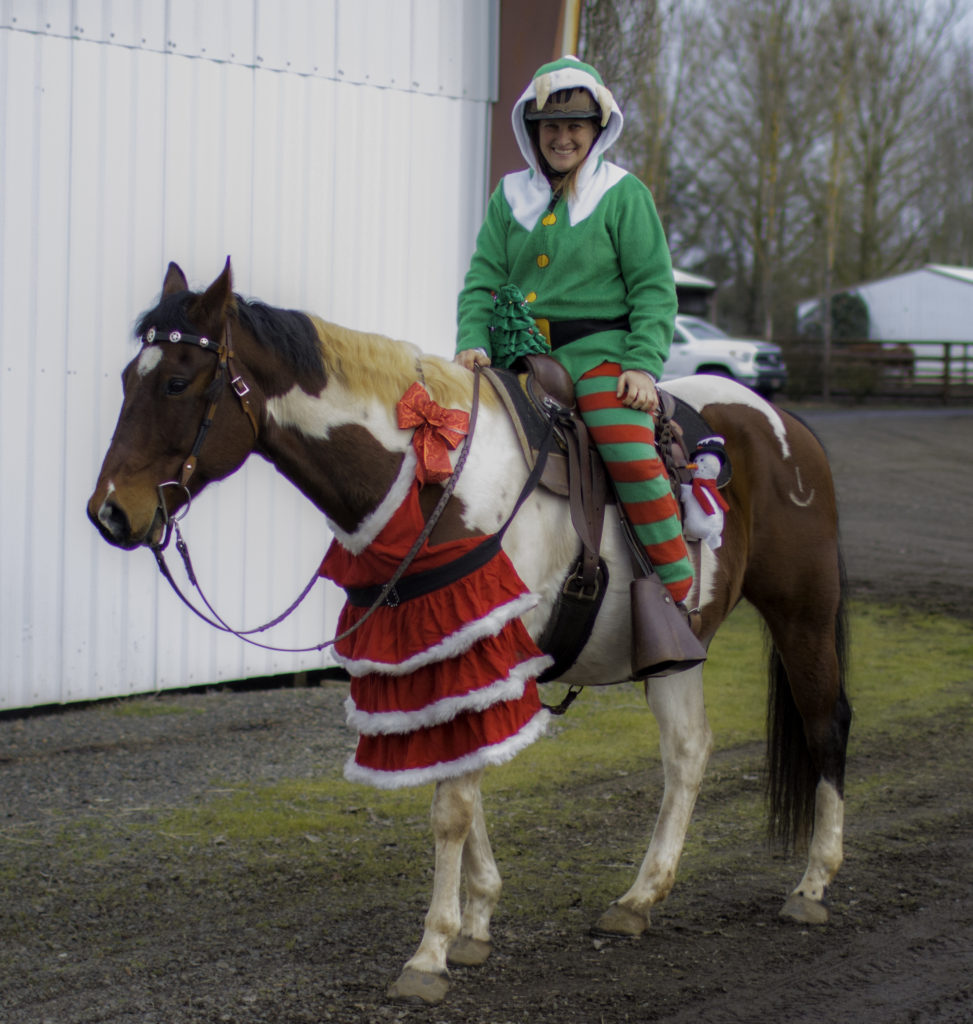
SufiXmas

Great animal training requires substantial knowledge and mechanical proficiency.  But perhaps even more, great training requires artistry.

Recent decades have been a golden era for the science of animal training.  Our understanding of behavior has grown and evolved, our techniques for utilizing that knowledge have advanced, and core principles have become widely understood by a great many trainers. Hallelujah!

But knowing, and mastering, techniques is only the first half of becoming a good trainer. I have known several trainers who possessed extensive book knowledge but whose training outcomes were dismal. And I have observed others who had very little knowledge but who achieved incredible results. Why?

For teaching almost any behavior, numerous techniques can be utilized; and the well-versed trainer knows many.  But selecting the right technique for an individual animal at a particular moment demands acute perception and judgement: when to push; when to ease pressure; when to encourage, to coddle, to take a break; when to reward with food or toy or praise or play; when to correct, to lure, to raise or lower criteria; when to cheerily accept effort, to add energy, to be calm; when to wait, to rest the dog for more energy or exercise them for less; when to capture or back-chain; when and how to proof; when more training is needed, or less …. .

For some trainers, this feel – this ability to read an animal and a situation and respond with just the right tool – comes easily.  For others it seems almost impossible. As with so many talents, there is an innate component, but there is one process that can maximize whatever talent a person may possess as a trainer: mindful experience.

Not to be confused with mere repetition (some people can “train” for thousands of hours without really hearing or learning), the single most powerful means to develop training artistry is to carefully, critically, thoughtfully observe and listen as one trains.  During each moment you are training, your dog is reacting, responding, showing you what is working and what is not.  You must listen. Science and technique must be so honed that they require little attention and recede into the background as you focus everything on feeling your dog. You must attune yourself to the dog’s reactions, not only the obvious changes in behavior, but the tiniest and most-subtle changes in body language – eyes, ears, tail, energy, enthusiasm, engagement.

You must constantly adjust and file away each moment as information that will help you to develop and refine your training intuition. Videotaping yourself can be useful, as can asking other trainers to observe and critique your sessions. But ultimately you must listen to your partner and refine your partnership so that you instantly and seamlessly accommodate your partner’s needs at each moment.

This is not to disparage science. By all means read and study and listen and learn everything you can.  It will all help you improve.  And absolutely spend many, many hours learning and practicing various techniques. But ultimately the training excellence you achieve depends upon how willing and able you are to listen to the animals with whom you practice.

Share
 July 12, 2016  Posted by at 5:05 pm Tagged with: , , , ,
Feb 122013
 

Dear Dog, and other animal,Untitled-3 Breeders,

Over the past few years, dog breeders have been included in much controversy, and I want to take a minute to address all “serious” dog breeders directly:

Thank you!  Thank you! Thank you!  You have so deeply enriched and improved my life, and the lives of nearly every person I know, and I want to encourage and implore each and every one of you to keep breeding and know that your efforts are well recognized and understood by many of us, even if that truth is sometimes lost in the clamor…

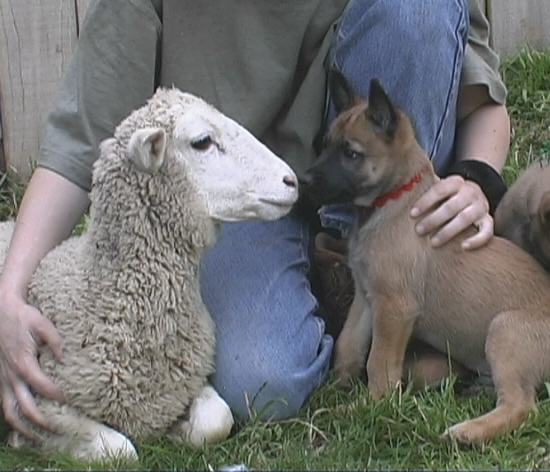
Johnny014Dog breeders are often vilified by Animal Rights zealots, by well-meaning but woefully misguided members of the public who have been persuaded that breeders are causing overpopulation and filling justsheepshelters, by rescuers and shelter workers whose views of the world have become so skewed by the war they are waging that they have lost all perspective, and by those in the media who prefer drama to truth.

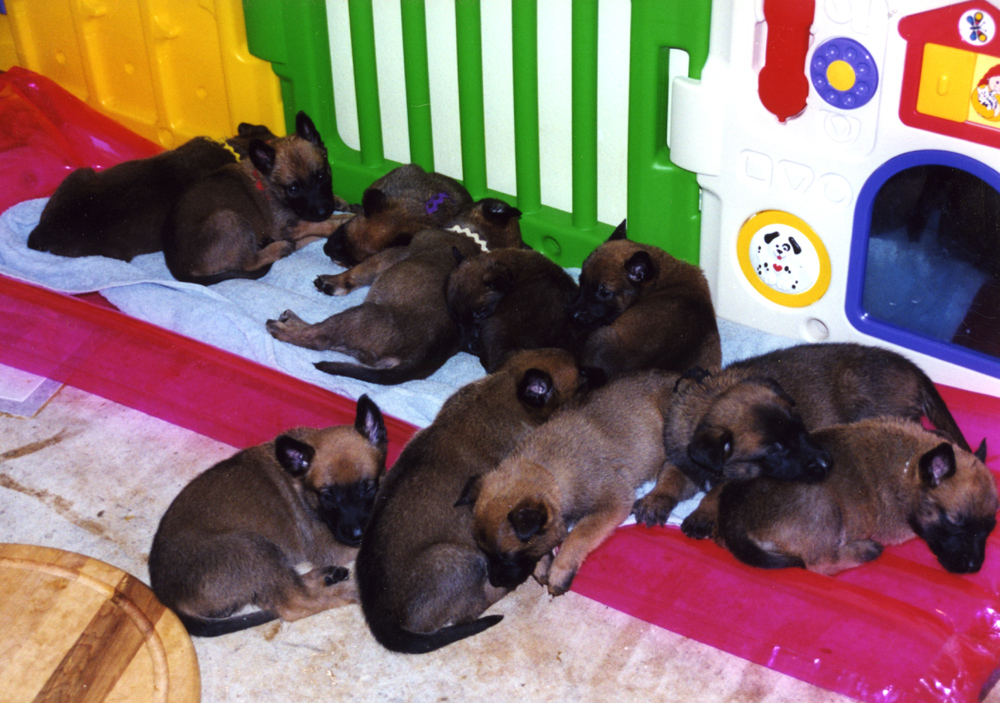
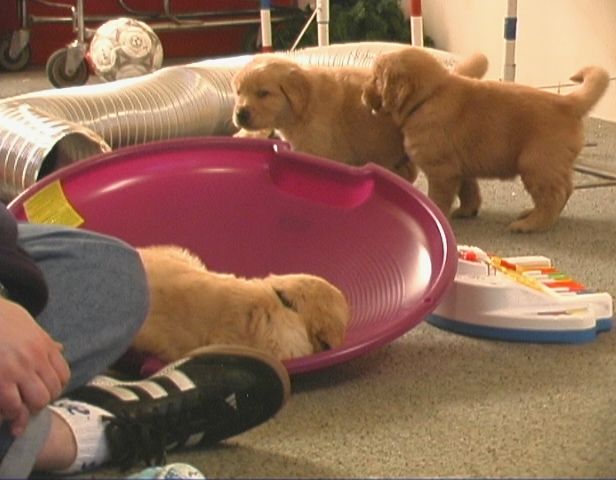
Breeders are the solution, not the problem. You are the true heroes stewarding the present and the future of dogs.  You are the ones creating healthy, well-structured animals with great temperaments and excellent early socialization. You are the ones funding health research. You are the ones devoting your lives and resources to the betterment of the species. You are the ones who put in twenty hour days giving your puppies everything and then wake up three times during the night to check on them. You are the ones whose dogs are virtually never in shelters because you do such a good job screening and placing and taking back dogs. You are the ones who have virtually eliminated overpopulation within your realm and in fact created a shortage of good dogs such that it often takes years of waiting before a puppy is available.

Clip0039That another, completely unrelated, group of idiots allows their dogs to keep reproducing for no good reason and filling shelters; that a few profit-driven miscreants breed countless dogs in horrid conditions; that rescues and shelters keep placing horrific dogs in homes so that they bounce back and keep the system full; that naivety motivates the unnatural and unsustainable notion of no-kill, that by nature dogs produce more puppies than are needed and so some excess and attrition are unavoidable—these things are not your fault!

napYes, there are issues that breeders need to improve—breeding towards extremes, prioritizing the wrong goals, breeding too young, over-breeding certain lines, placing excessive value on breed purity, hostility towards differing opinions, elitist attitudes, undervaluing balance—and I hope breeders will continue to improve.  And yes, there are some awful breeders out there.  But all in all, it is you who have created the wonderful dogs of today, and you who will create the wonderful dogs of tomorrow, and my gratitude for that is nearly boundless. And while there are some lovely accidentally bred dogs in shelters (I have a few!), and some awful dogs being produced by breeders, at the end of the day the quality of dogs generally being produced by careful breeders is leaps and bounds higher than what is generally available in shelters.

All thhosee mindless anti-breeder rhetoric is nothing more than misleading hate-mongering that points the blame in the wrong direction: if breeders, and the public, buy into this mindless propaganda, we will lose all the good dogs in a few years, with virtually no reduction in the number of poorly bred dogs filling the shelters.

So please, keep up the good work and know how much you and your hard work are appreciated. And above all, know that the fabulous creatures you produce are dearly loved and valued.

Clip0034

blueboy

Share
 February 12, 2013  Posted by at 9:17 pm